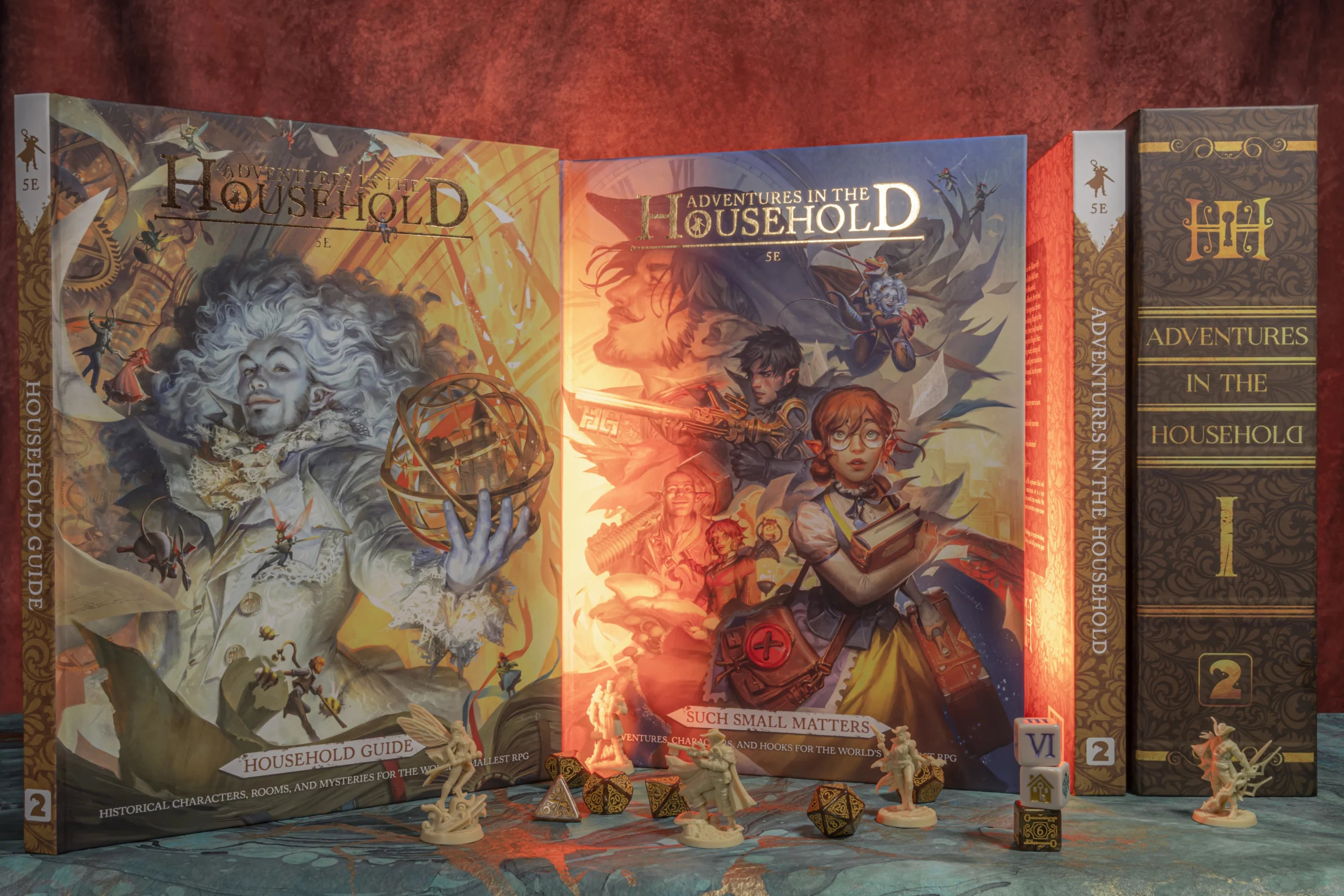
Published by Two Little Mice, Household casts players as “littlings”—tiny members of the Little Folk living inside a massive, abandoned House. It is a House with a capital H because for them it is not merely a building, but a continent, an entire world. Every room can become a nation, every piece of furniture a mountain, and every animal a gigantic and potentially lethal creature. The setting evokes early 19th-century Europe, featuring societies, diplomacy, revolutions, and conflicts interwoven within a seemingly minuscule space. This is the game’s first great merit: it transforms the everyday into something wonderfully alien.
The premise might sound like a children’s fairy tale, but Household is not simply “a game about cute little mice”. Characters belong to various factions of the Little Folk (such as Boggarts, Fairies, Sprites, and Sluagh—joined in the second volume by Barghests, Gnomes, Fae, and Shinigami), each with its own culture, history, and political weight within the House and the Garden. After years of conflict, the peoples are experiencing the “Fragile Peace”—a period of relative calm that nonetheless conceals simmering tensions, old rivalries, and new threats. The result is a setting that blends fantasy, European folklore, adventure, political intrigue, and domestic comedy—a mix that works surprisingly well.
The second great surprise of Household is its ruleset. Tests utilize pools of six-sided dice (d6) based on a unique principle: players look for matching results. Pairs, sets of three, or larger combinations generate successes. It is a seemingly simple choice that completely changes how a roll is perceived: instead of thinking, “I need to roll at least a 15”, you consider what you already have in hand and weigh whether it is worth pushing your luck further.
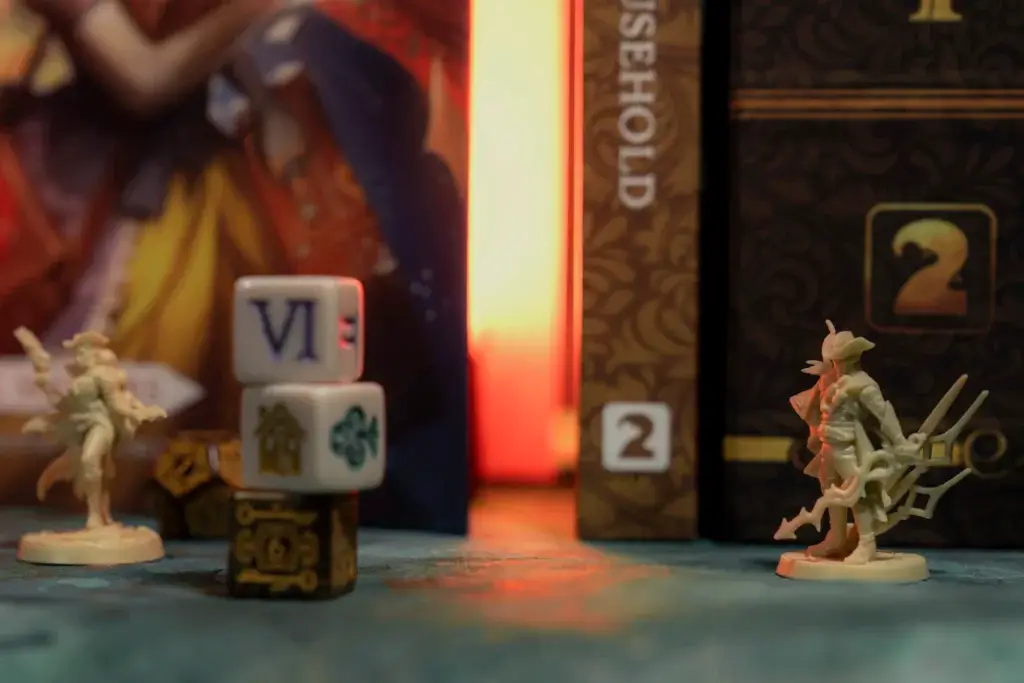
This is where the system’s true engine comes into play: risk management. When the result isn’t enough or when you want to achieve something truly spectacular, you can spend successes to raise the stakes, turning the check into a sort of “push-your-luck” game. The more you aim to achieve, the more you risk losing what you had already secured. It is a mechanic that creates incredibly cinematic moments at the table with everyone holding their breath as they watch the outcome of the dice. This philosophy shapes the kind of stories the game aims to tell, turning every crucial decision into a dramatic dilemma:
How much do you want to risk?
How much are you willing to compromise your safety?
Do you want to stop or go for the big score?
What are you willing to sacrifice for a better result?
If looking at the cover or the illustrations you might think of a classic fantasy in miniature, in reality Household gives enormous space to relationships, politics, reputation, and intrigue. The House thrives on delicate balances, and an adventure can start from a seemingly banal mission and transform into a diplomatic issue. Unlike what happens in other games—where the world is often tailor-made for groups of mercenaries ready to clear dungeons—in Household the world already exists regardless of the characters. They are part of a complex society, with a position, a culture, and expectations, offering the storyteller the opportunity to make a diplomatic dinner as important as a pitched battle.
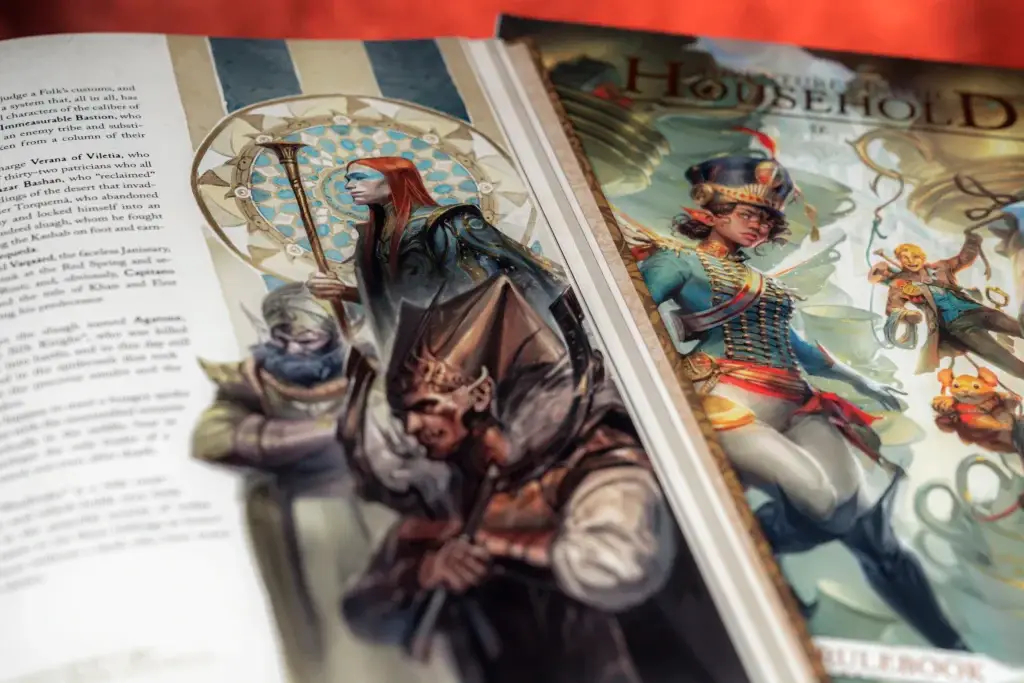
From an aesthetic point of view, Household is a true masterpiece. The incredible illustrations don’t just embellish the pages, but fulfill a fundamental narrative task: defining scale and giving depth to the game world. Each table manages to capture the dizziness of being in an immense room, balancing the fairy-tale warmth of the Little People with the dizzying and domestic scale of the House. It is an immersive graphics section that makes each manual a collector’s item and an unparalleled visual experience.
The overall quality of the project and the strength of its writing have not gone unnoticed in the RPG world. Household has conquered international critics and the public by obtaining prestigious recognition—including nominations and notable awards in the ENNIE Awards circuit (the “Oscars” of role-playing games) and the title of Game of the Year in Italy.
However, Household also has some limitations to keep in mind. Ironically, the weight of the setting itself is one of the strongest and weakest points of the product; the mass of names, peoples, factions, and historical events requires a certain effort of initial assimilation for groups accustomed to more immediate titles. It’s not a tactical game, and those looking for a detailed simulation made of millimeter measurements and extreme optimization of statistics will be disappointed. The game clearly favors spectacle and narrative.
Household has a very strong identity. He takes a bizarre idea and takes it to its extreme consequences with elegance, originality, and a strong personality.
If you are looking for an RPG capable of making you look at a cup, a drawer, or a bookcase with the curiosity of finding out what is hidden up there, then Household absolutely deserves a chance.
In the end, its greatest value is precisely this: taking the world we know and forcing us to look at it from a few centimeters above the ground.