“First, yes, I got engaged to Caitlin in Taormina when Mount Etna was erupting. I got down on one knee in a garden in Taormina, which is very close to where my family comes from.”
Alongside this personal milestone, Joe has officially returned to Dungeons & Dragons in a major leadership role.
“The new leadership of Dungeons & Dragons is committed to building a bridge back to the kind of fantasy that I love, and the kind of fantasy that I know a lot of people in this audience love. I was given my own line with Dungeons & Dragons called ‘Icons’. I was named Chief Creative Officer, and I was allowed to bring back people that I wanted to work with.”
The initial lineup of legendary creators he is bringing back includes:
Margaret Weis
Tracy Hickman
Laura Hickman
R.A. Salvatore
Mike Mearls
Luke Gygax
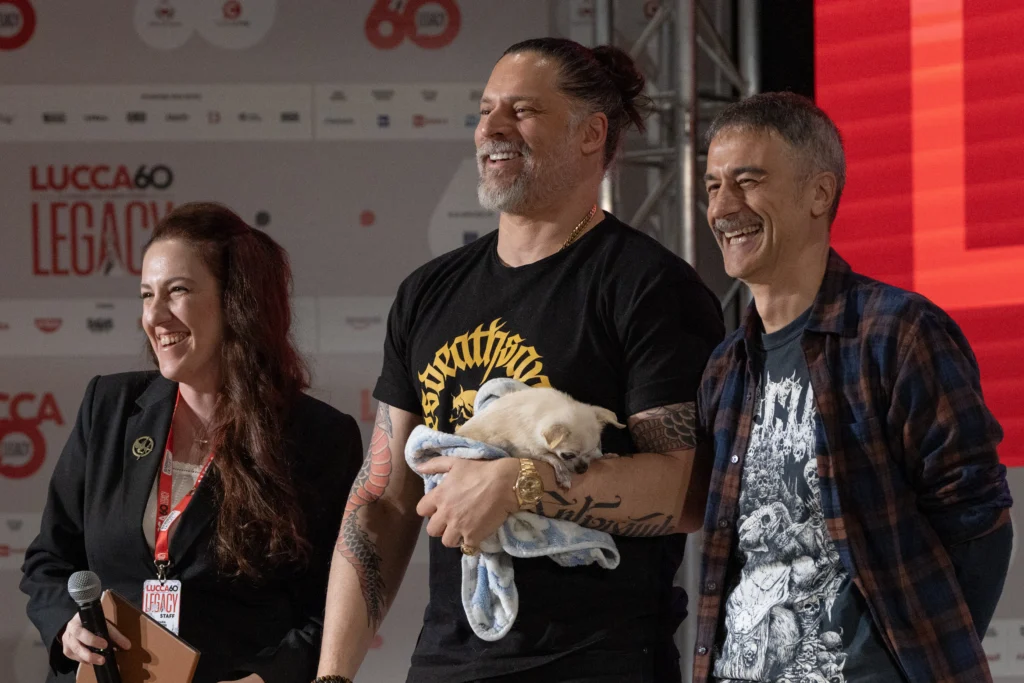
Before stepping back into the public eye, Joe fought a private battle that nearly cost him his life.
“I was getting mis-diagnosed in the beginning; there were surgeries that went on that were, like, unnecessary. I had a major surgery which saved my life, but was very gruesome. They had to cut my large intestine; they had to take the whole large intestine out. I almost died and I lost a lot of weight. I had to learn how to walk again, and I had a colostomy bag for 7 months. This was all happening right before I got offered the role of Deathstroke in Batman. When I got offered Deathstroke, I said yes. But I didn’t know if I was ever going to be able to shoot the full Batman movie. I just needed the motivation to live. I needed the motivation to learn how to walk again… During that period, I kept things secret because I was scared. I was scared of the illness, scared of the uncertainty. It was like being hunted by an invisible assassin who would shoot and then disappear again… Then COVID happened. The world shut down, so I could live in secret and try to fight this thing. That went on for 7 years of illness, and then 3 years of me writing the book. So, it was about 10 years that I kept that secret.”
Joe’s journey to heal his body led him to investigate his family history and the deep, unspoken traumas carried across generations. During the panel, Joe touched on something deeply profound about how identity and trauma travel through families. In the United States, many people come from a mosaic of different backgrounds—each carrying its own distinct history. As Joe pointed out, earlier generations often coped with hardship through silence:
“The generations who came before me, they don’t talk. Something bad happens, we don’t talk about it. So, I didn’t know what I had inherited until I got sick.”
When he began digging into his maternal roots to understand his condition, he uncovered horrific historical truths. His mother is half Croatian (from the Dalmatian coast) and half Armenian and German. During the Armenian Genocide, his great-grandmother endured unimaginable horror: her entire town was massacred, her husband was killed, and eight of her children were murdered right in front of her. She was shot and left for dead, while her ninth child—a baby—was left behind to starve. Against all odds, she survived. She pulled herself up off the ground, strapped the infant to her back, and swam across a river to safety but the baby, unfortunately, didn’t make it. She eventually ended up in a survivor camp where she was forced to work for a German soldier who impregnated her before returning home to his family in Germany. That child born in the camp was Joe’s grandmother. Tragically, she grew up only to fall severely ill, passing away shortly after giving birth to Joe’s mother.
“My mother lived her life in fear. And then she had me, and I got hurt with all of the same things that her mother had. As I was approaching the same age her mother was when she died, I started to experience all the same things. It was as if I was being taught what my family suffered through so that I would understand…”
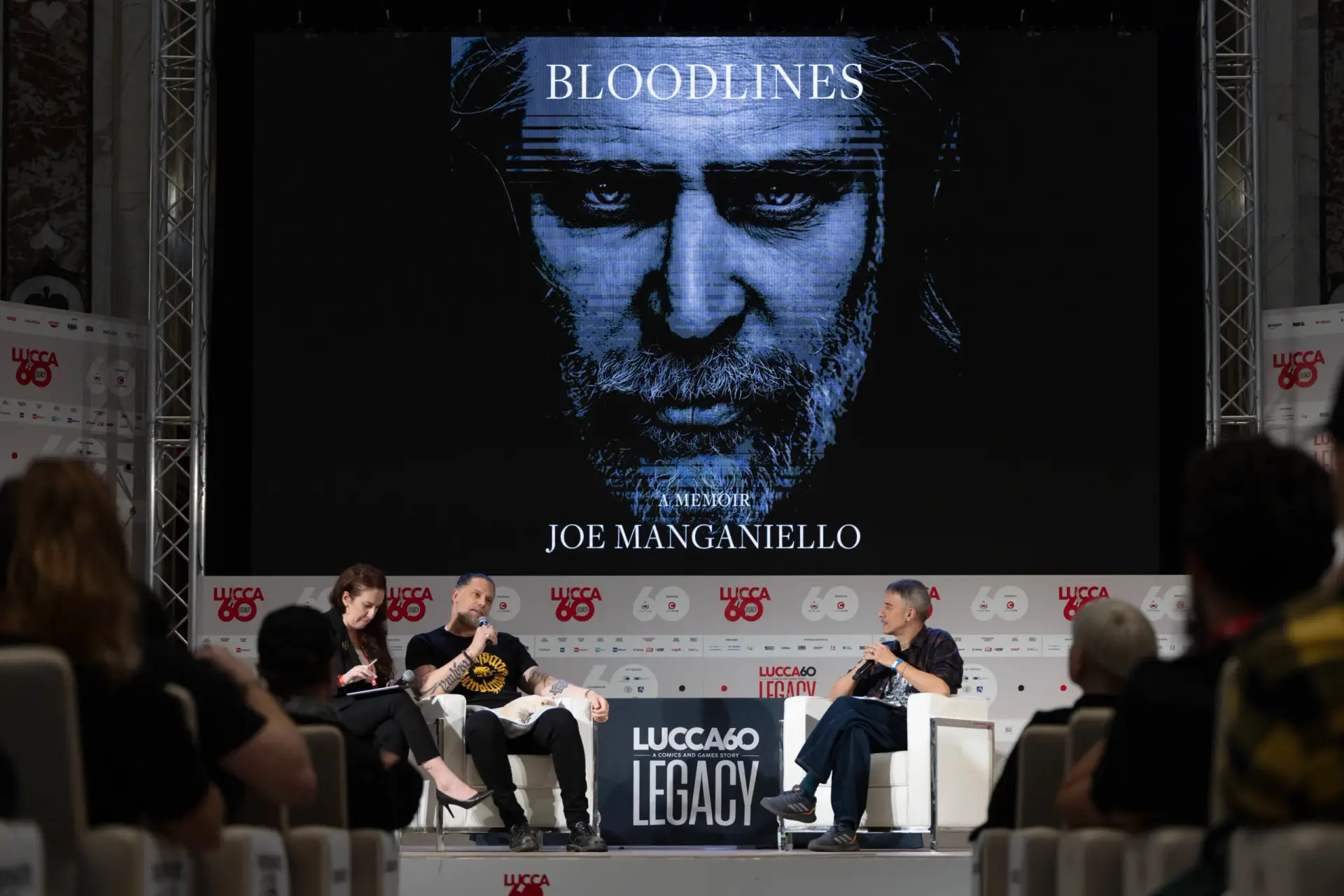
That realization became the catalyst for his upcoming book Bloodlines:
“I knew what my purpose was, that my ancestors were trying to show me—or make me feel—the way that they did, so that then I could tell the story. So in the book Bloodlines, I tell the story of my great grandmother. I told the story of my grandmother. I told the story of the German child. I told their stories because they were thought to be buried under the ground in time. But now I get to bring them up and resurrect them, and then doing so, I wound up healing myself, and I heal my ancestry.”
The discoveries didn’t stop there. On his father’s side, Joe uncovered a secret that redefined his very name. His paternal grandfather was not biologically related to the family line, meaning Manganiello was not his ancestral surname. DNA research revealed that his true biological roots on that side were a mix of Irish, English, and African slaves brought to America. This revelation led Joe down a path of spiritual exploration while seeking physical and emotional healing.
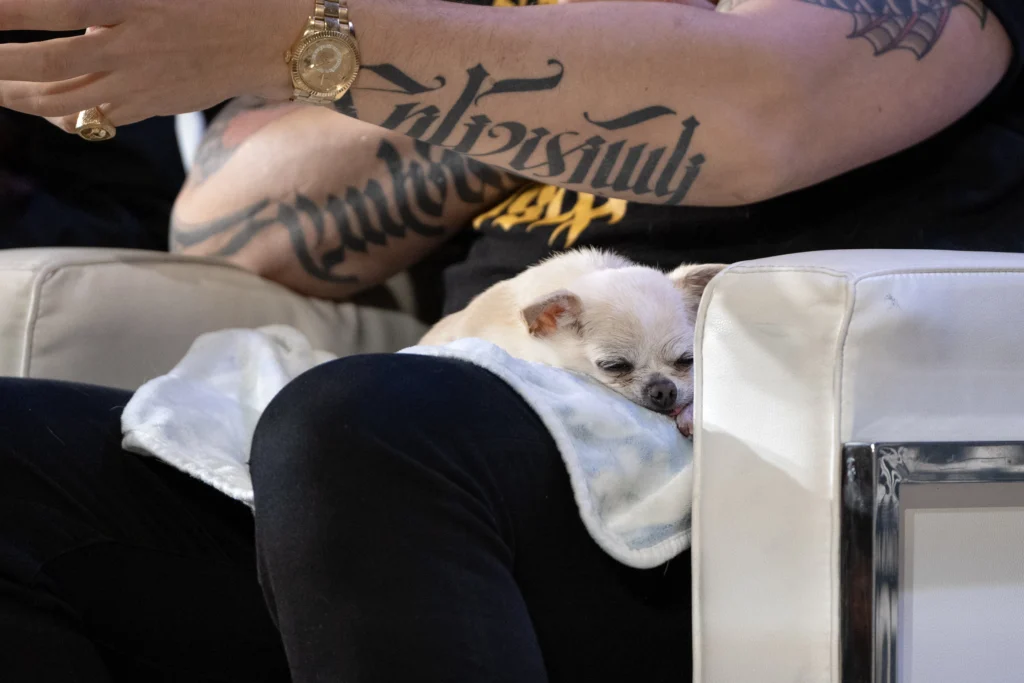
In the midst of his darkest days, an unexpected companion stepped in to save him: a rescue Chihuahua named Bubbles.
“Chapter 3 in the book is called ‘The Familiar’. Wizards have a familiar—Merlin, Harry Potter—they have owl, witches have a cat, and I have a Chihuahua. Bubbles was sick, just like I was. I was losing a lot of blood, and Bubbles had blood issues too. She was in a shelter, sleeping in a cage on newspaper, and no one would keep her. I had never had an animal growing up, but she came to me and looked up at me… I took her to get surgery, healed her, and took her home. I was in a very, very dark dark place, being destroyed by this disease. But I would wake up in the morning and see her. Something happened where I turned from the patient into the caregiver. It started building my self-esteem because I felt useless because of this disease, but I was not useless to her.”
Today, Bubbles is practically a world traveler. As Joe joked, she’s even an official EU citizen with her own passport—having traveled to 17 countries and over 150 cities alongside him.
Confronting his mortality didn’t just change his health habits; it completely reshaped his outlook on his career, pushing him back toward his childhood passion: Dungeons & Dragons. Facing an uncertain future forced him to strip away all pretense and focus on what truly mattered to him.
“When I got sick, I didn’t know I was going to be able to continue as an actor. I didn’t know I was going to be able to get to you as a director, as a producer. I didn’t know if I was going to live a week from now, a month from now, or next year”
he recalled.
“I thought: ‘If I only have a short period of time left in my life, what do I want to do?’. That’s when I started heavily getting into Dungeons & Dragons again… If I was going to die, then this was the hill I was going to die on.”
This shift in mindset led directly to the creation of his dark-fantasy streetwear brand: Death Save. About nine years ago, official D&D apparel was virtually nonexistent, and playing TTRPGs in the US still carried an uncool, old-school stigma.
“At the time in the US, if you played D&D, people made fun of you—you were either ‘satanic’ or an uncool dork. But I thought: ‘If I’m going to be dead next year, what does it matter? I’m going to play Dungeons & Dragons.’ Death Save was memento mori (remember [that you have] to die)—a reminder that you are a skull underneath, and you will return to the skull, so move now.”
Now serving as Chief Creative Officer for the new D&D Icons line, Joe is using his position to right past wrongs and bring foundational fantasy authors and designers back into the fold—including legends like Mike Mearls, Margaret Weis, Tracy Hickman, Laura Hickman, R.A. Salvatore, and Luke Gygax. For Joe, honoring these creators isn’t just about nostalgia; it’s about respecting the architects who laid the foundation for modern tabletop gaming.
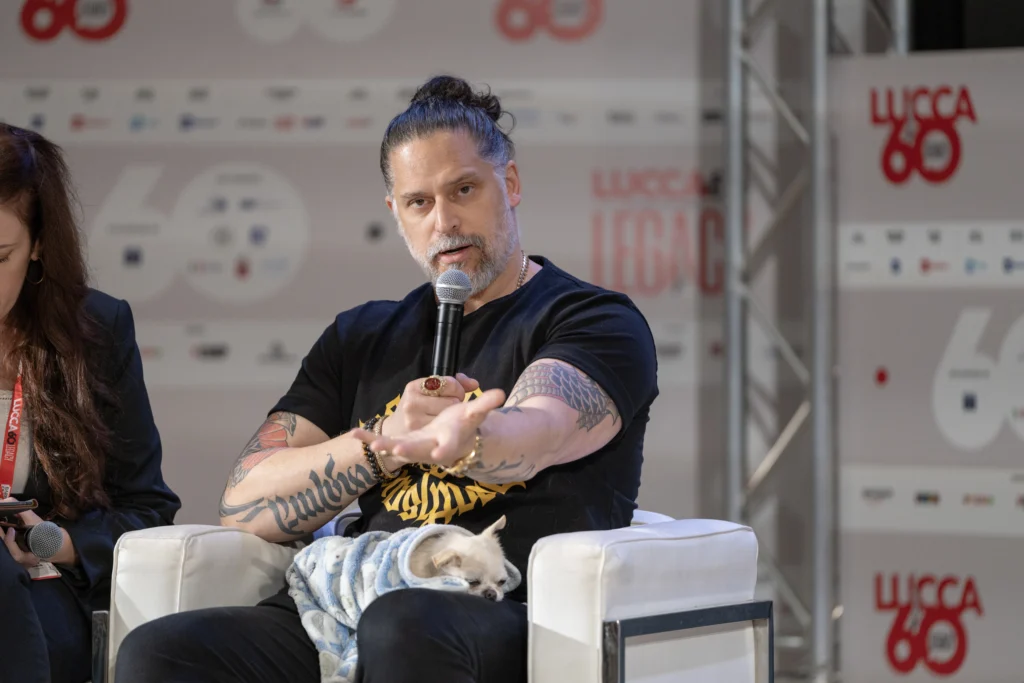
“Gary Gygax is the Stan Lee of roleplaying”
Joe emphasized, speaking passionately about restoring their legacy.
“How can a church be complete without its saints? Why are these creators outside the castle when they built the castle? I wanted to bring them back inside.”
While honoring the past, the Icons project introduces an intense, dark post-apocalyptic campaign setting:
“It’s a post-apocalyptic possible future where the Blood War has ended because the demons won—they beat the devils and overran the world. In Sigil, the Lady of Pain speaks for the first time, and a wave of power destroys the world and kills the demon lords. She kills all of the demons, but it destroys the world, and so Gods laid dead. You and your friends form groups of Godkillers to hunt down these weakened demon lords across corrupted domains…D&D will continue to put out their core products—that’s like Coca-Cola Classic. We are making vanilla coke or something different, you know, different flavor, you know?”