For Yoko Kanno, music comes before the visuals.
Some music accompanies visuals, while other music eventually becomes inseparable from them. It is difficult to think of Cowboy Bebop without mentally hearing the brass section from Tank! kick in. It is even harder to imagine the work without that blend of jazz, blues, rock, and experimentation that defined its identity. Much of that magic bears one signature: Yoko Kanno.
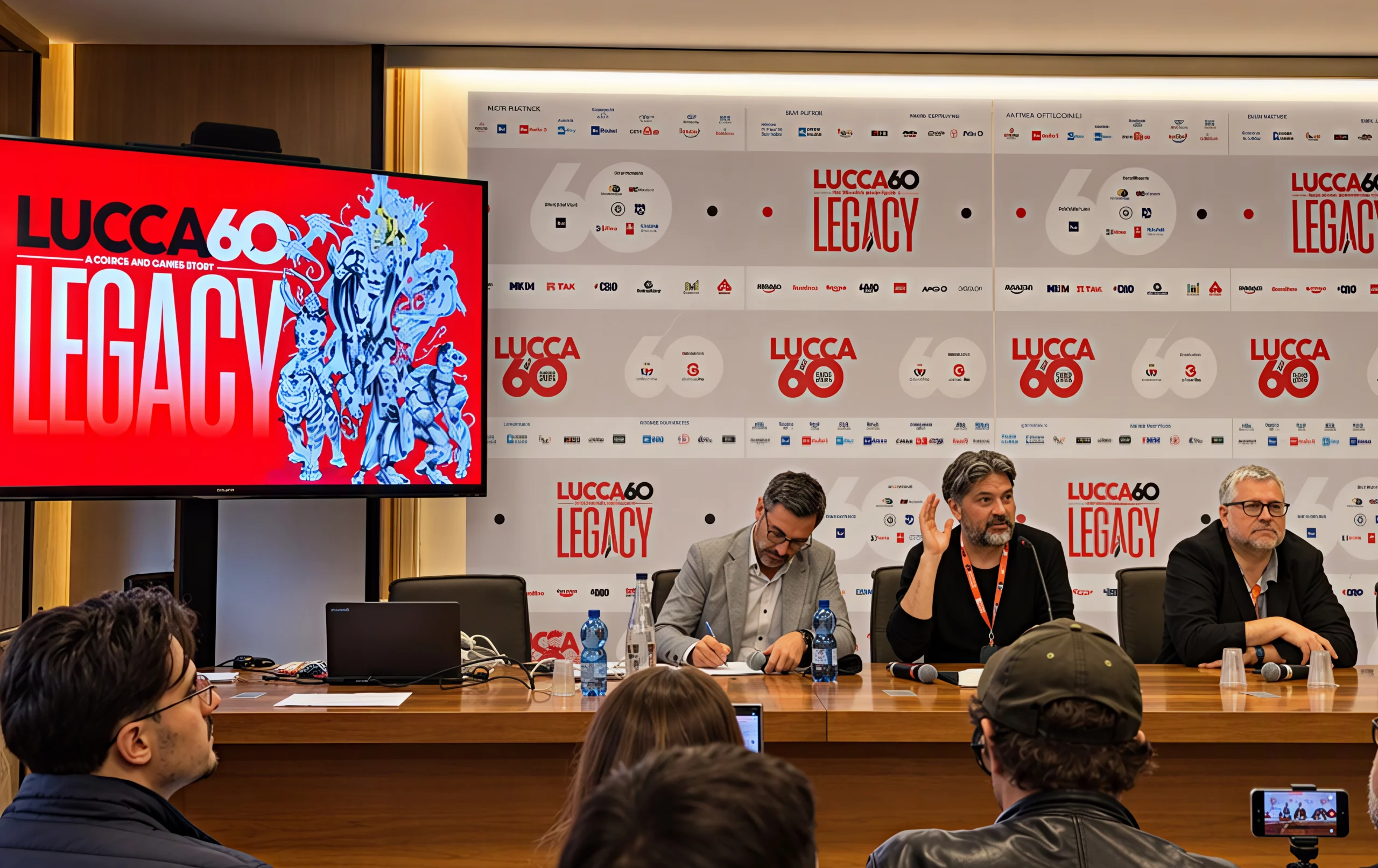
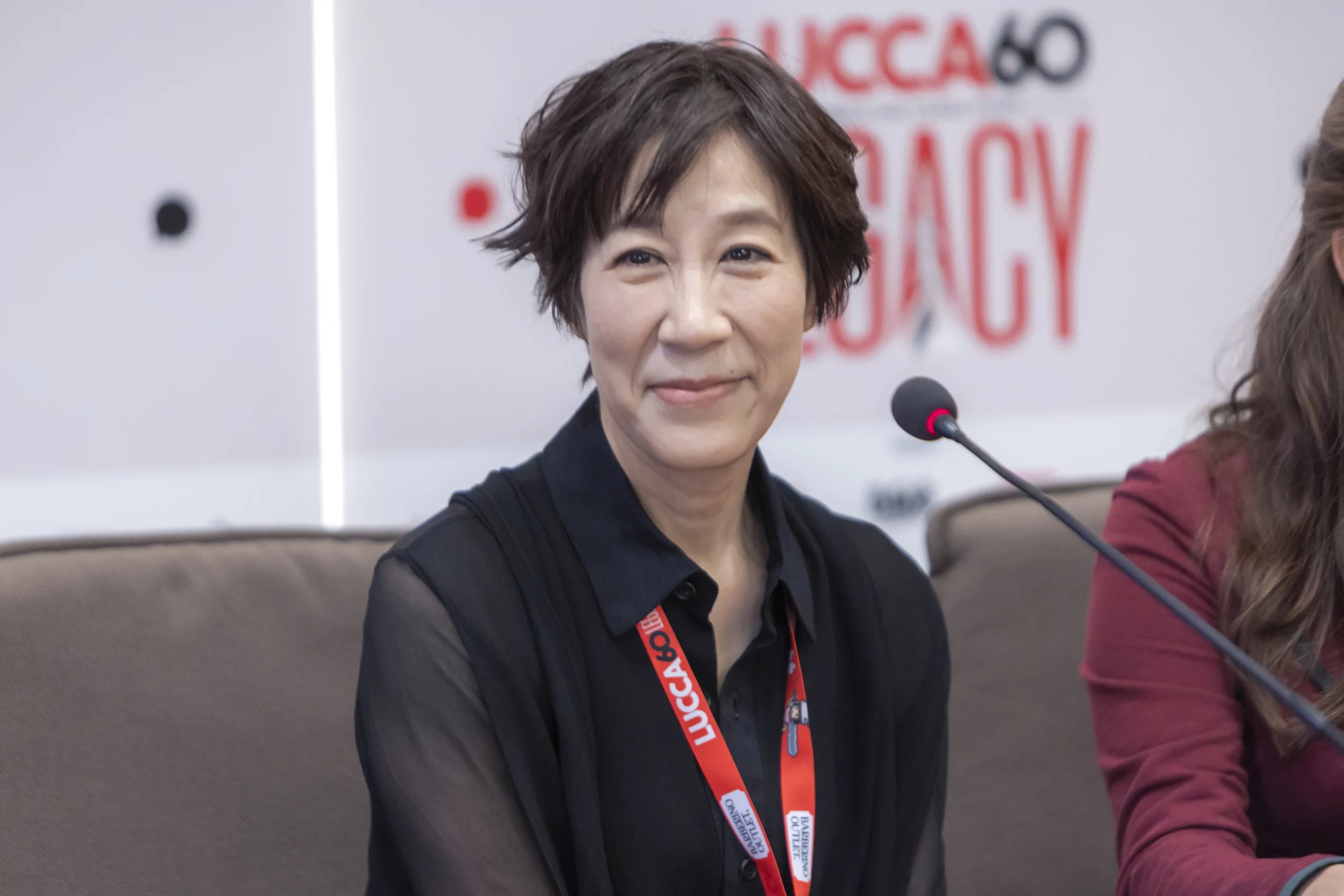
Meeting her at Lucca Comics & Games offered a chance to look beyond her most famous tracks and explore what lies behind such a distinctive compositional style. Perhaps the most interesting insight to emerge during the press café is that the creative process of one of the anime world’s most acclaimed composers is not governed by a rigid, pre-planned method; rather, she is a musician who seems to truly find her stride precisely when the rules are called into question.
Kanno greeted the audience with a smile and a quip that immediately set a relaxed tone:
“I’m a bit famous here.”
She delivered the remark with disarming casualness—a striking sentiment, given how profoundly her work has shaped the imaginations of entire generations.
The conversation first turned to her connection with Italy. This was not her first time in the country; some twenty or thirty years ago, she spent time in Rome on several occasions for recording sessions. During those visits, she worked on music for video games and, most notably, for The Vision of Escaflowne, recording at Ennio Morricone’s studio. This was an experience that stands out as one of the most significant in her artistic development—and it wasn’t just a matter of technical quality. What struck her most was the distinct way in which Italian musicians approached their work. In Japan, she was accustomed to using “tuning”—the process of adjusting the tonal qualities of an instrument or a voice—during recording sessions, while in Rome, she encountered a completely different approach. No one seemed to need such techniques; the musicians worked together, listening to one another and collaborating like a large family.
For Kanno, this was a discovery that took her completely by surprise. Music could emerge without relying on established, rigid procedures—driven instead by people’s capacity to truly listen to each other. This is a recurring theme throughout the discussion: for Kanno, music is never merely the product of an individual idea.
One of the most beautiful moments of the meeting concerned her childhood. Kanno explains that she grew up in a family with no particular ties to the world of music. Her father taught Japanese, her mother was a nurse, and there were no musicians among her relatives either. Only later did she discover that her grandfather had dabbled in composition during her school years—a small family connection that, in hindsight, made music feel a little less distant from her own roots.
The most compelling explanation for her relationship with composition emerges when she describes the environment in which she grew up. Hers was a rather strict family, where openly expressing one’s feelings was difficult; even positive emotions had to be shown with restraint. Music became a space of freedom. Kanno recalls that, as a child, she felt a desire to use the piano to express emotions she couldn’t communicate verbally. While words imposed limits, sounds could be bold, instinctive and even tempestuous.
This is one of the revelations that best helps us understand her journey: music was not merely a passion, but a language through which she learned to express herself.
Although she later attended university and studied literature—even imagining a future as a writer—Kanno never seriously considered turning that passion into a profession. Music, by contrast, felt closer to her—something almost natural.
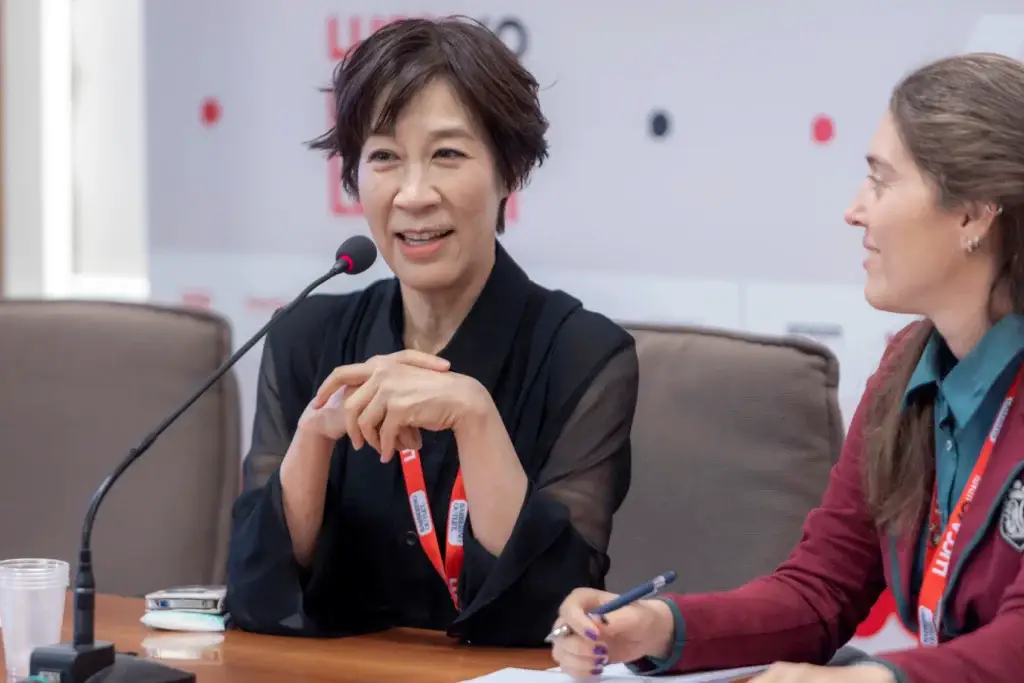
There is another surprising detail: she never studied composition through an academic program, nor did she take formal lessons to become a musician.
“I never took lessons in composition or in how to become a musician. I simply started, and little by little collaborations and work opportunities came along.”
She then adds a remark that perhaps sums it all up:
“When it comes to music, I’m in my comfort zone.”
Naturally, the conversation inevitably turns to Cowboy Bebop—the project that, more than any other, cemented Yoko Kanno’s status in the international consciousness. Her professional relationship with Shin’ichirō Watanabe actually began earlier with Macross Plus, a project they worked on alongside Shōji Kawamori. Kanno remembers Kawamori as having such an energetic personality that she jokingly admits she almost forgot Watanabe had also been part of that collaboration.
When the director first approached her to work on Cowboy Bebop, however, the project was still in its embryonic stage: neither the plot nor the characters had been defined. Watanabe had a very specific vision: he wanted jazz. Initially, Kanno was not at all convinced. In fact, she recounts having tried to dissuade him. She feared that a genre like jazz—with tracks that could last as long as ten or fifteen minutes—would not be well-suited for a production aimed at a broad audience. From her perspective, it was hard to imagine that viewers would want to listen to such long compositions. Naturally, we all know how it turned out. Jazz not only became a fundamental element of Cowboy Bebop’s identity, but it also helped make the work instantly recognizable, even decades later. During the discussion, Kanno herself admits that she changed her mind over time.
Speaking about The Seatbelts (the band she leads) and guitarist Tsuneo Imahori, Kanno describes a philosophy of collaboration that I find particularly compelling. She doesn’t just look for technically proficient musicians; she seeks out individuals with strong, personal creativity. Technique is important, but it isn’t enough. She provides a foundation—a starting point—and then invites others to step in, take initiative, and introduce elements she might never have imagined herself. At one point, she explains that she appreciates it when her collaborators manage to destabilize her work, effectively breaking down some of what she had initially constructed.
This approach is almost the polar opposite of the composer who insists on maintaining absolute control over every single note. Kanno wants to be surprised. She wants others to bring something new to the music—something she wouldn’t have thought to include on her own. Therefore, the ideal result isn’t a mere faithful execution of her instructions, but rather a meeting of different sensibilities.
When asked what kind of people her collaborators are, she offers a rather amusing description:
“They’re very unique, very cool—but also a bit strange. Some of them (she jokes) look almost like bums.”
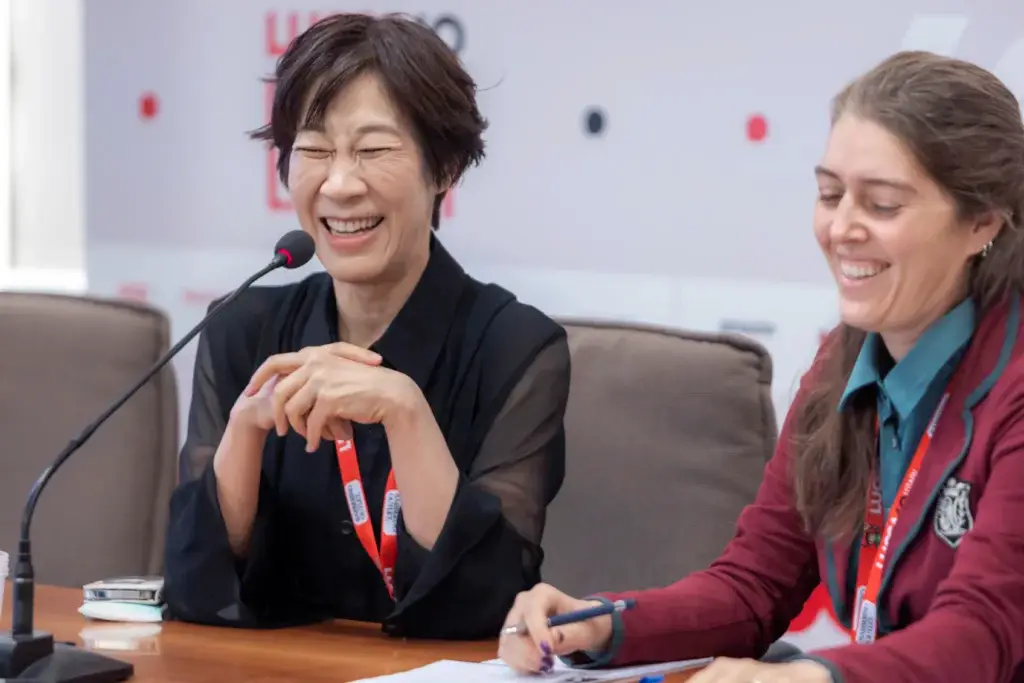
It’s hard not to consider how this spirit contributed to the sonic identity of Cowboy Bebop—a work that seems to take constant delight in shifting directions, moving from one musical genre to another without ever losing its own distinct character.
Among the more entertaining anecdotes is the one concerning Radical Edward, one of Cowboy Bebop’s most beloved characters. For some time, there has been a story circulating that Edward was actually inspired by Yoko Kanno herself. The composer reveals that she only discovered this while watching an interview with [director Shinichiro] Watanabe. It turns out that during the soundtrack recording sessions, Kanno had a habit of laying out a blanket near the piano and falling asleep right there. The director and other collaborators likely observed her in that position and found it distinctive enough to turn it into a reference point for the character. Her reaction is entirely in keeping with the lighthearted tone of the discussion: she essentially invites everyone to try the experience of finding a comfortable spot and sleeping there. This small anecdote speaks volumes about the sense of trust and familiarity that must have developed during the production of the anime.
Another particularly interesting point concerns Terror in Resonance, another collaboration with Watanabe. To compose the music, Kanno decided to travel directly to Iceland. This choice was inspired by the story’s setting, characterized by cold, snowy landscapes and a distinct atmosphere of isolation. The composer wanted to discover firsthand what emotions might arise in such a place. She didn’t want to merely imagine the cold through visuals or the director’s instructions—she wanted to experience it.
This approach reveals a great deal about how she engages with a project. For her, music can emerge from the physical experience of a place—from the sensations one feels while moving through it. To better illustrate this concept, she offers a very evocative image during the discussion:
“Can you imagine recording or listening to music that evokes ice and snow while in Hawaii?”
The answer is, naturally, quite different if those same sensations are experienced in Iceland. In this case, the journey is not merely a change of location, but an integral part of the creative process.
Then there is a lesser-known, yet truly fascinating chapter in her career: the persona of Gabriela Robin. For a long time, Kanno used this pseudonym for some of her own vocal performances, maintaining a certain ambiguity regarding the singer’s true identity. During the press café, she explains that she envisions Gabriela Robin as an entity from outer space. However, the choice is rooted in something deeply personal. She had loved to sing since she was a child, but a school incident left a lasting mark: a teacher scolded her for singing with a voice that was too loud, too boisterous. For Kanno, it was such a traumatic experience that it drove her to seek out a kind of alter ego through which she could express herself freely. And thus, Gabriela Robin was born.
When asked where the name actually came from, Kanno replies with disarming simplicity:
“There’s no particular reason. I just liked the way it sounded.”
This touches upon a recurring theme throughout the conversation: the need to find a space where one can express oneself without feeling constrained.
Kanno seems to be constantly seeking situations that set her in motion—experiences that allow her to step outside her established habits and discover new possibilities. Whether it concerns a musical genre, a geographical location, or a narrative universe, what matters is the opportunity to explore.
Leaving this encounter, one gets the distinct impression that Yoko Kanno is a musician far less concerned with definitions than one might expect. She does not like to be confined to a single genre, she does not appear to have a fixed working method, and, above all, she does not necessarily seek to control every aspect of the music she composes. In fact, she seems to find a significant part of her creativity precisely when someone else steps in and alters her ideas.
Behind such complex and recognizable soundtracks lies a person who has learned to view the unexpected not as a problem, but as a possibility.