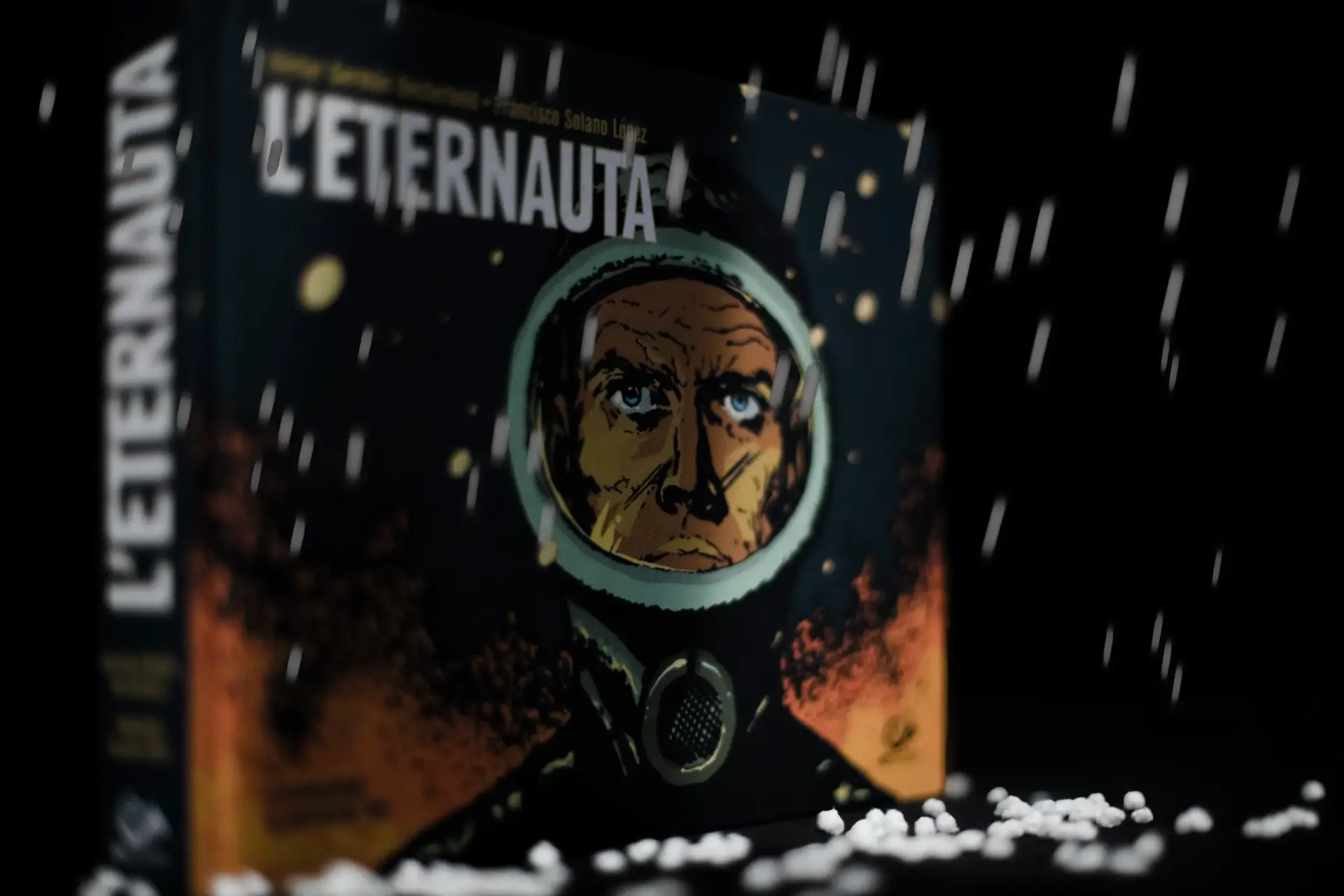
To speak of “The Eternaut” (El Eternauta) is not merely to review a comic book, but to analyze one of the highest peaks in the history of graphic storytelling.
Written by Héctor Germán Oesterheld and illustrated by Francisco Solano López, this Argentine masterpiece (originally published between 1957 and 1959) has transcended the science fiction genre to become a powerful political and social symbol.
The story begins on an ordinary night in Buenos Aires. A group of friends is playing cards when, outside, a phosphorescent snow begins to fall. It is a lethal snow: anyone touched by it dies instantly. What initially appears to be a natural disaster soon reveals itself to be a full-scale alien invasion. The protagonist, Juan Galvez—along with a handful of survivors—must transform himself from an ordinary citizen into a soldier of the resistance in a desperate struggle against invisible and deadly enemies (the *Gurbos*, the *Manos*, and the mysterious *Them*).
Unlike American comics of the era, there is no “superman” here. Oesterheld introduces the concept of the “collective hero”: the only way to survive is not through individual heroism, but through group solidarity and organization. It is a profoundly human and democratic vision of resistance.
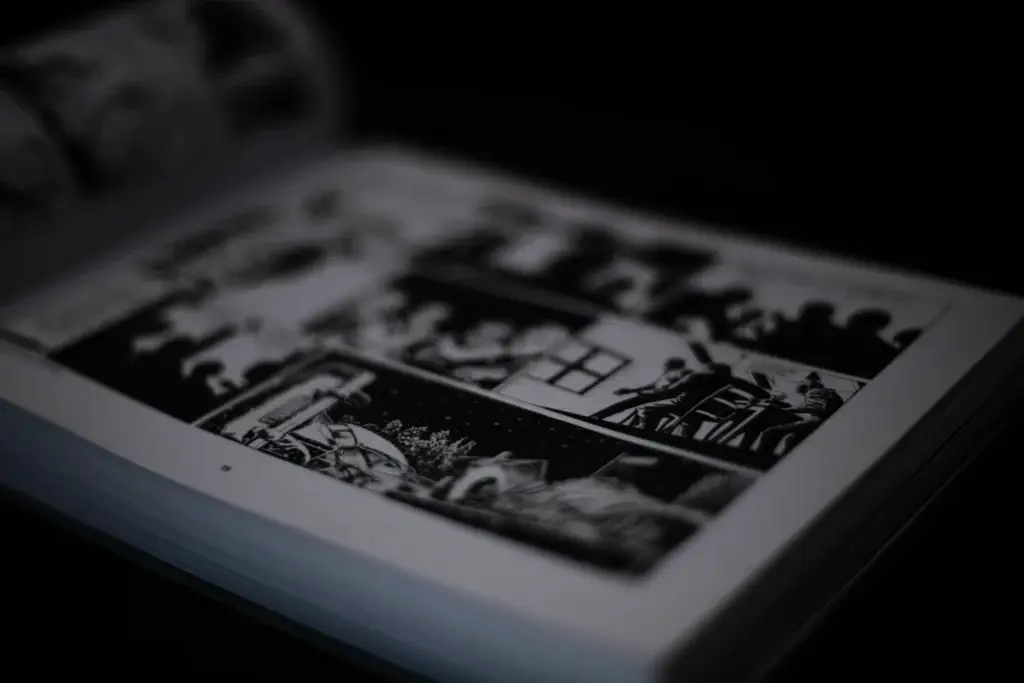
Solano López’s artwork is masterful in its depiction of Buenos Aires as a ghost town. Seeing iconic landmarks—such as the River Plate stadium or the Plaza de Mayo—transformed into battlefields lends an agonizing realism to the narrative, making the invasion feel terrifyingly immediate.
Although written years before the Argentine military dictatorship of the 1970s, the work tragically anticipated its central themes: the disappearance of individuals, the fear of the “Other,” and the struggle against an invisible oppressor that uses other peoples as cannon fodder. Oesterheld himself, tragically, became one of the “desaparecidos” in 1977.
The modern reader, accustomed to the frenetic pace of contemporary comics, might find the text a bit dense. At the time, the use of captions was much more frequent; they served to explain every action and thought of the characters. Nevertheless, the pacing in “The Eternaut” is taut right from the very first panels.