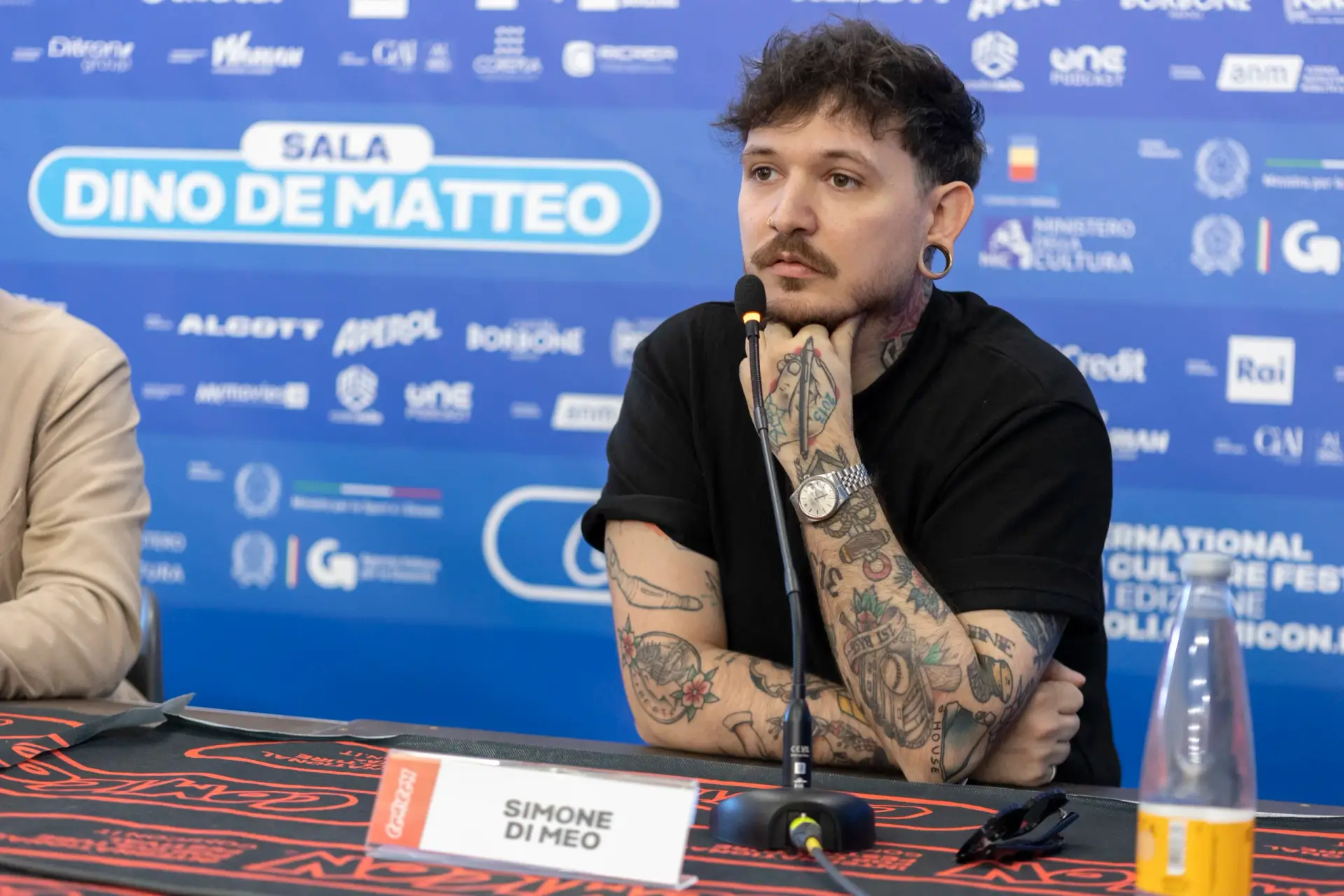
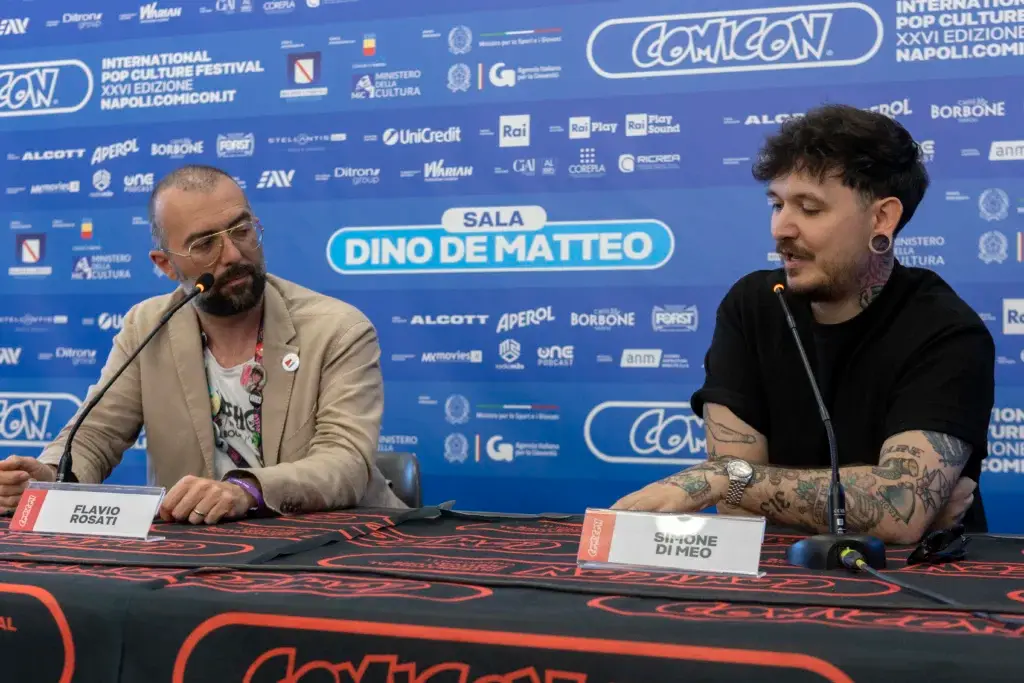
To mark the 10th anniversary of his career in the U.S. market, Simone Di Meo took part in a panel discussion that explored the linguistic and visual differences between Italian and American comics. Blending personal reflections with insights into his relationship with pop culture, the artist offered a profound overview of what it means to draw for the industry giants across the ocean today.
Di Meo emphasized that the language of comics possesses a unique “alphabet”, wherein the absolute priority is iconicity; in the US market, a character must be immediately recognizable, powerful, and heroic. The imagery serves the character’s “stage presence”. In the Italian market, the tradition tends to focus more heavily on pure storytelling, where the visual power of the individual protagonist is often subordinated to the development of the narrative itself.
What was particularly interesting was his reflection on maintaining one’s own artistic identity. Di Meo stated firmly:
“…I didn’t want to bend my style to fit the American mold; rather, I wanted it to be suitable…”
This distinction is crucial. Di Meo explained that the United States—being historically a nation founded on immigration—possesses a natural inclination toward accepting what is “different”. This openness translates into a constantly evolving visual language, capable of absorbing influences from both anime and cinema.
Simone’s journey was not merely the product of natural talent, but of rigorous study. Analyzing the foundational language and grasping the fundamentals of American comics constituted the first phase of this study. Subsequently, Simone tackled the structure—that is, the study of specific rules such as composition and dynamism. Finally, came the development of “taste”. Once he had mastered the technique, Simone allowed feeling—mood and personal taste—to guide his hand toward a style that felt truly his own.
The panel concluded with a moment of great closeness with the fans. The artist graciously engaged in a lengthy Q&A session, responding with openness and courtesy to the audience’s curiosities—a testament to the enduring bond he maintains with his Italian audience despite his global success.