“I live in a perpetual crisis, but tours and albums distract me from these frictions with the world… there come moments when the crisis becomes deeper, and therefore less manageable… mine was an artistic crisis, in the sense that after so many years, so many albums, it was difficult for me to find the lifeblood. Which for me is fundamental when creating; you can’t create on command… there must be a need. And I developed this need, I felt it as I gradually freed myself from myself as a character.”
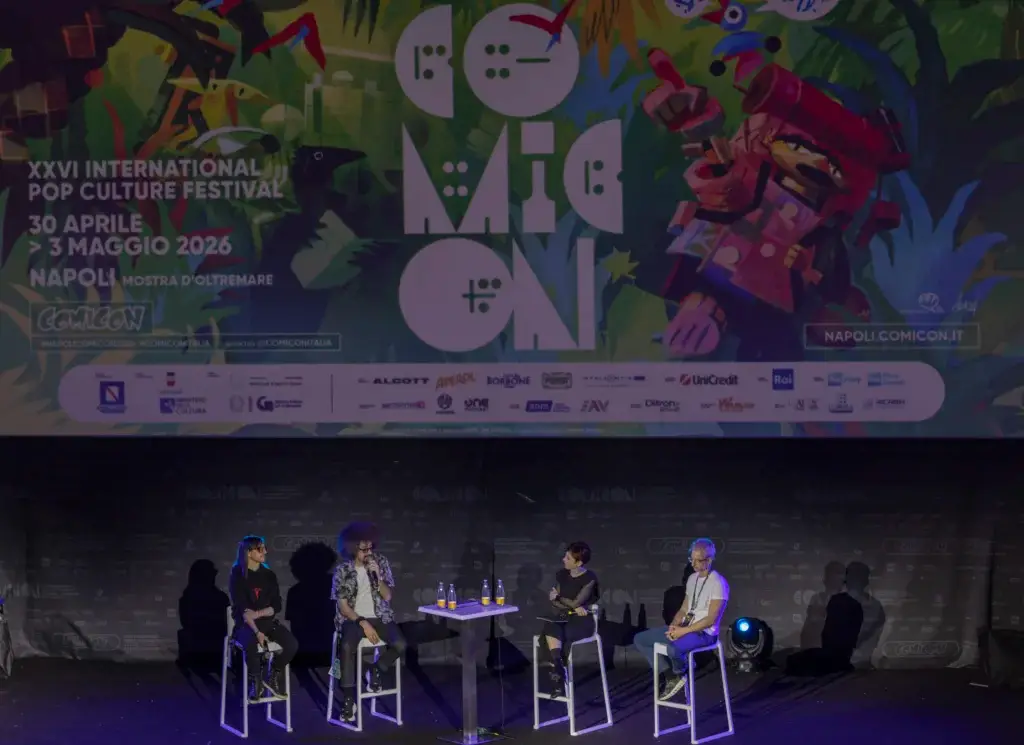
These are difficult words that carry significant representative weight. With these words, Caparezza began his panel at the Naples Comicon.
Caparezza (Michele Salvemini) tells us a little about his creative process in developing Orbit Orbit. Starting from the crises that followed Exuvia, the artist opens up in a different way than usual. Michele emphasizes the differences between comics and music and how an album is different in its “construction” compared to a comic. He told us about the challenges he encountered in creating this comic-book album, but also how they were resolved with a simple deck of blank cards. The solution was simple: he drew evocative chapters on sheets of paper.
“It was fun… they were performative, meaning they gave me other ideas, and I immediately drew another chapter, and then I moved them around, and then I played with them, until I understood the direction to take based on this harmonious chaos that was before me.”
Michele continues by telling us how the characters were born, what they represented, and how they evolved. Of course, the discussion of Darktar was particularly touching: the portrayal of impostor syndrome. The author also believes this syndrome is present in everyone, and we can only agree. Darktar’s “defeat” is part of the creative process. You have to face the negative shadows that—like pitch—stay with you. But these shadows aren’t the only negative character. In fact, Idea isn’t just a good thing. As Michele says: “…when an idea becomes an obsession, it also becomes something negative…”
As usual with Caparezza, there was a philosophical moment. Personally, I think the author encapsulates a complex thought in just a few words.
“Imagination is important because reality exists, but it cannot and must not replace reality, because it is a product of it… feet on the ground, head in the air.” This is the thought that—remember—is the basis of “Gli occhi della mente” (The Eyes of the Mind) on the latest album.
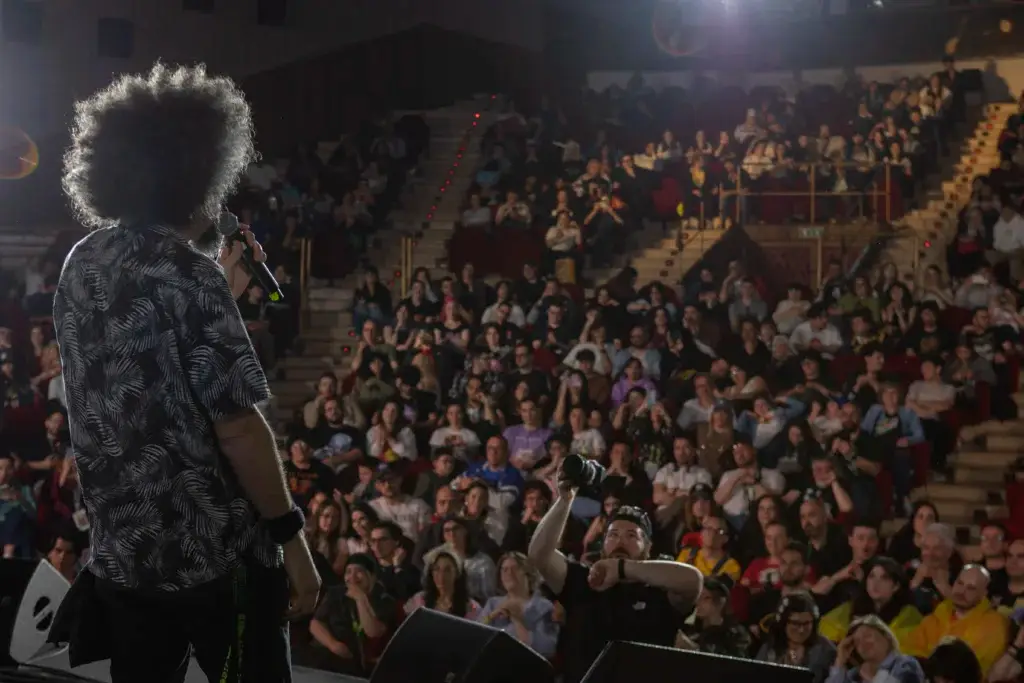
Caparezza continues with a deconstruction of the musical foundations. The singer revealed sound references ranging from Galaxy Express 999, to Doctor Who, to Gundam, to 2001: A Space Odyssey, to… Out of the Tunnel by Caparezza himself. Many of these references are subtle, hidden, and almost invisible to the ear. As Capa himself says: “The quotes aren’t just those found within the lyrics.”
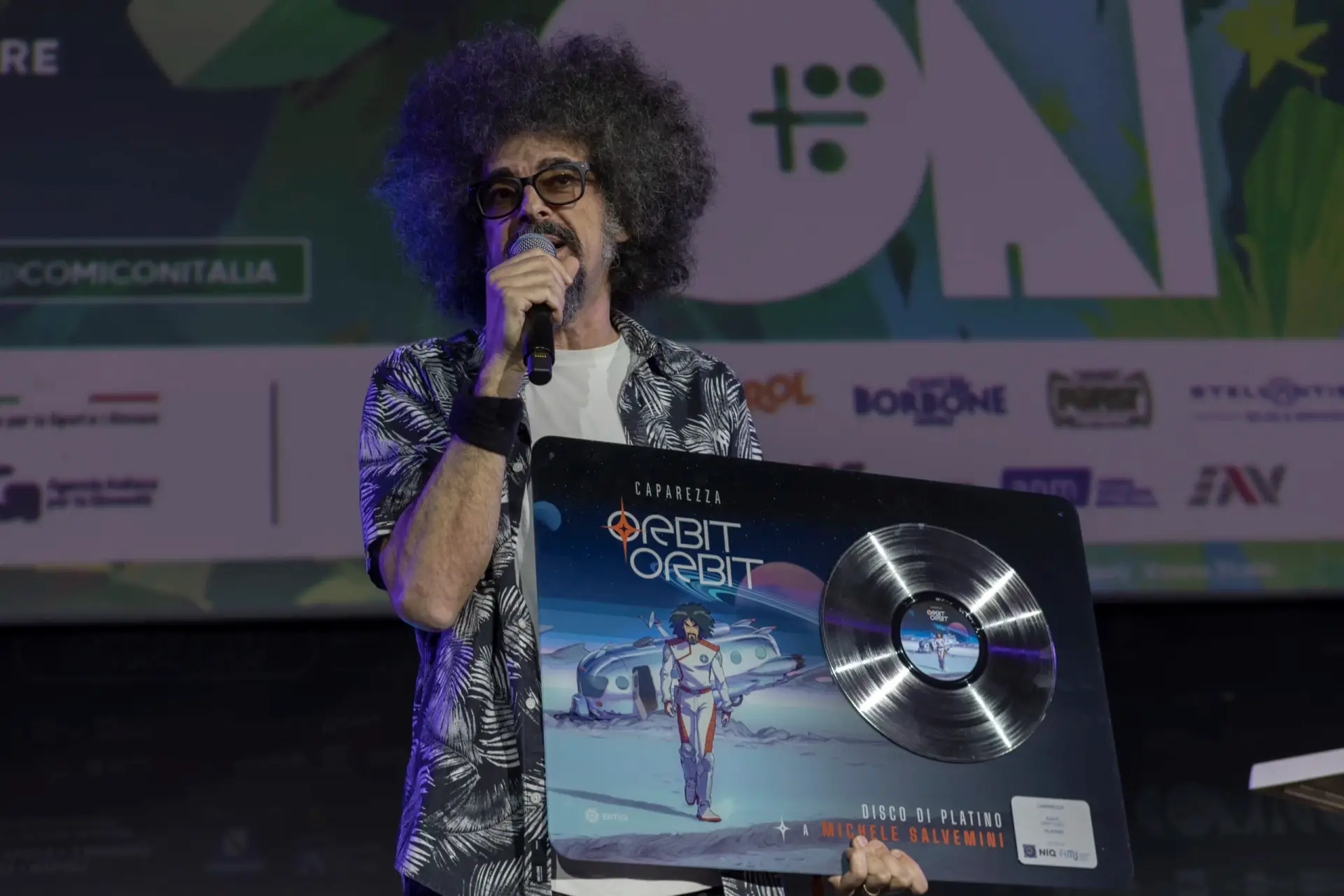
The panel concluded with a surprise for Caparezza himself. Representatives from FIMA (Federation of the Italian Music Industry) presented the singer-songwriter with a Platinum Record celebrating over 200,000 copies of Orbit Orbit sold.