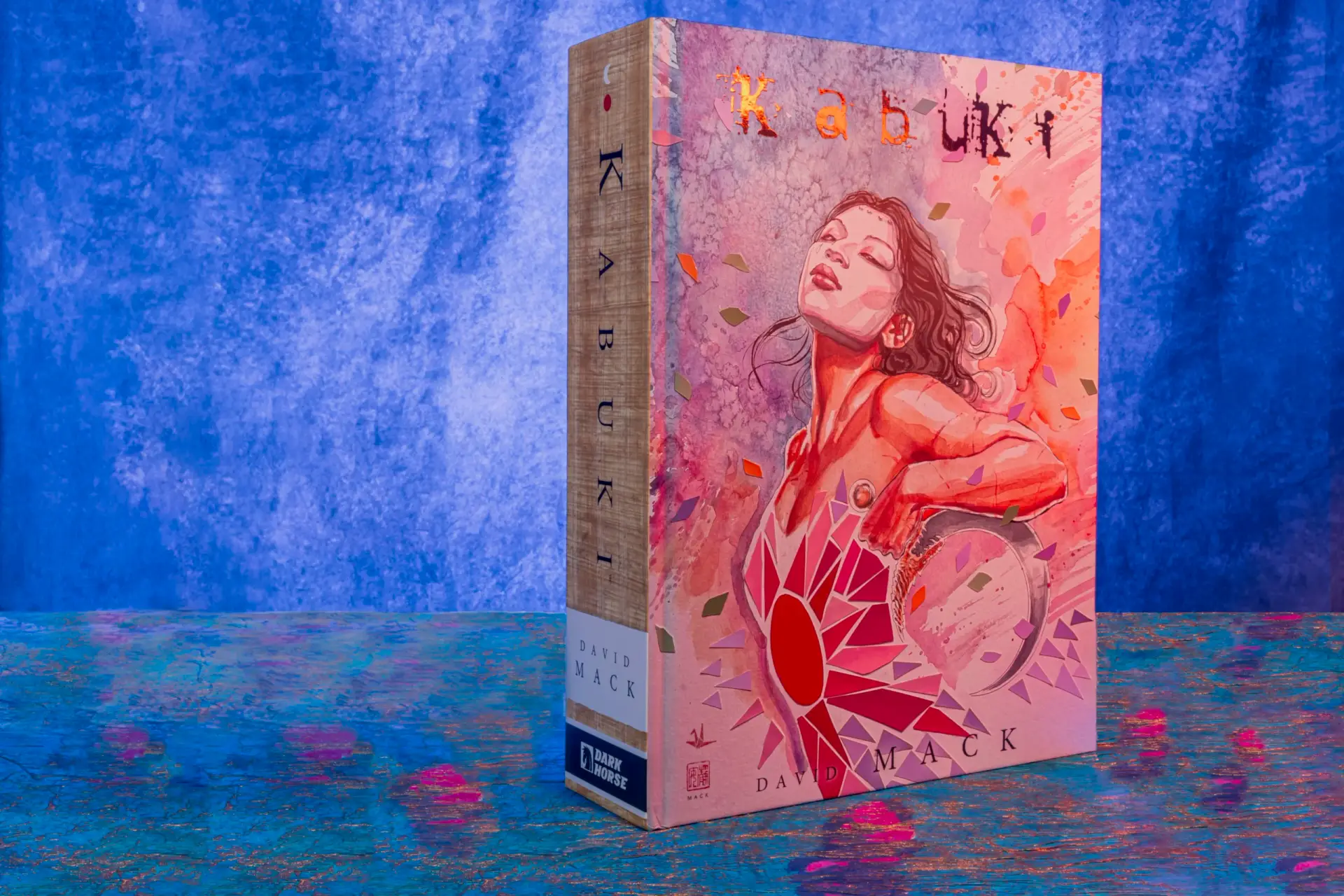
To say that Kabuki is simply a comic is an understatement; we’re faced with a layered sensory experience. Although it begins as a samurai story tinged with a ruthless noir and a thirst for revenge, the work quickly evolves into a profound psychological and metaphysical journey.
At the center of it all is Ukiko, an assassin working for a secret government organization in future Japan, but who ends up losing the boundaries of her own “self.”
The true strength of Kabuki, and David Mack’s brilliance, lies in a visual metamorphosis that parallels the protagonist’s growth.
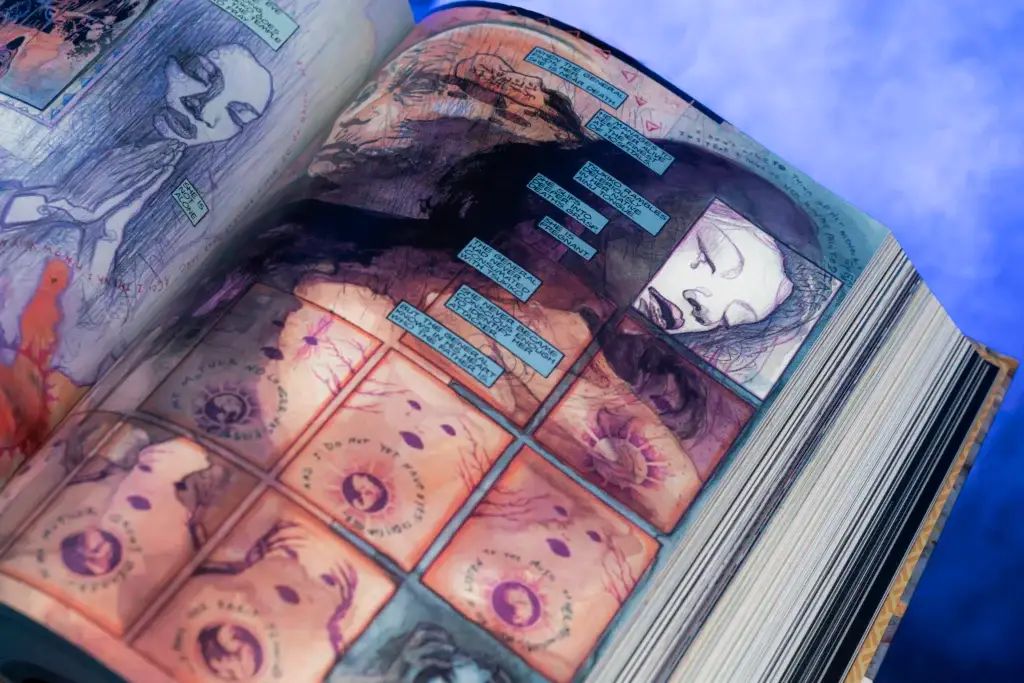
Circle of Blood is the first narrative arc of the story and is dominated by stark, dirty, and sharp black and white. This represents Ukiko’s worldview: binary, rigid, made of orders to be obeyed, and blood to be shed. The metamorphosis follows with the arcs of Dreams and The Alchemy. As the story progresses, the narrative literally explodes. Mack abandons the confines of traditional vignettes to embrace mixed media: pages filled with ethereal watercolors mingle with rice paper collages, fragments of photography, and Japanese calligraphy. This isn’t aesthetics for aesthetics’ sake; it reflects the collapse of Ukiko’s certainties. As she questions her mask and her reality, the page itself fragments, forcing the reader to reassemble the work’s meaning alongside the protagonist.
It is a work to contemplate, not just to read.
Kabuki is a dense read, at times philosophical, and never banal. Mack challenges the reader to slow down. It’s not a comic to be quickly “consumed” on the train, but a work to be contemplated like an artist’s diary. The narrative becomes sparse, leaving room for reflections on identity, trauma, and art’s ability to heal the wounds of the soul.
It’s the perfect book for those who loved Neil Gaiman’s dreamlike atmospheres or Bill Sienkiewicz’s visual experimentalism.
Ultimately, Kabuki is a love letter to creativity itself: a story that speaks to the soul as intensely as it enchants the eyes.