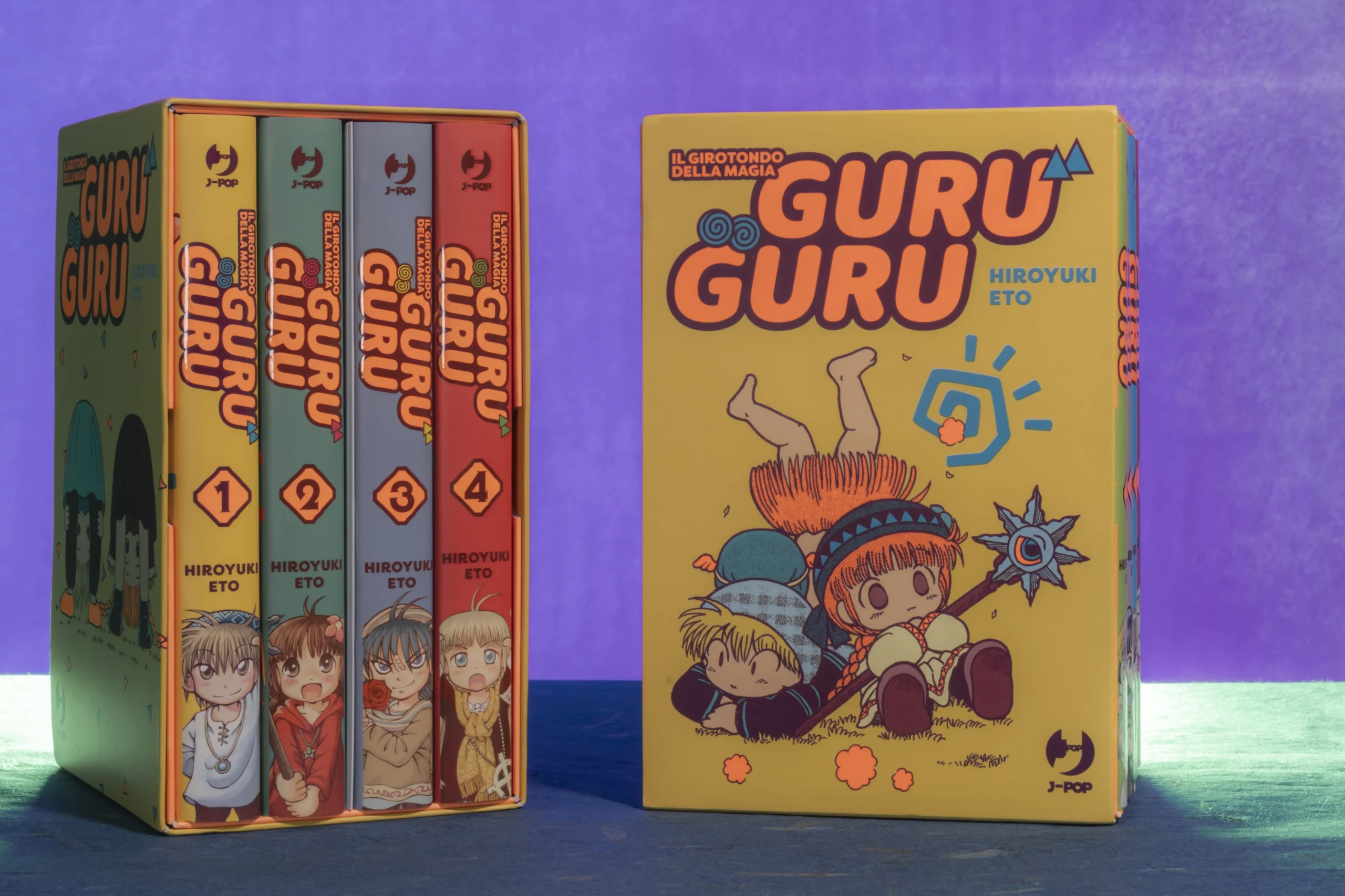
“In a world of mystery and magic, a witch and a valiant warrior embark on an endless journey…” This is the beginning of the opening theme of the legendary Guru Guru, one of the series I loved most from the — now distant — 90s and early 2000s.
Guru Guru is a fantasy-comedy manga that stands out thanks to its simple, immediate, and irresistible humor. Even those unfamiliar with the genre can easily appreciate it. The story is set in a world populated by heroes, wizards, and monsters, but its true strength lies in the way it good-naturedly pokes fun at all these stereotypes.
The protagonists are Nike and Kukuri: Nike is a young “hero” who is far from perfect, and Kukuri is a small sorceress with a sweet and innocent demeanor, a little naive but surprisingly strong. Often accompanying the protagonists are Edvarg, the old man in the straw skirt, and Gipple, the wind spirit. These two act as comedic foils to an already hilarious duo. There are also many other characters—recurring and otherwise—who will literally make you die laughing. In fact, humor is the heart of the manga: the gags are frequent, often absurd, and work precisely because they require neither explanations nor prior knowledge of role-playing games.
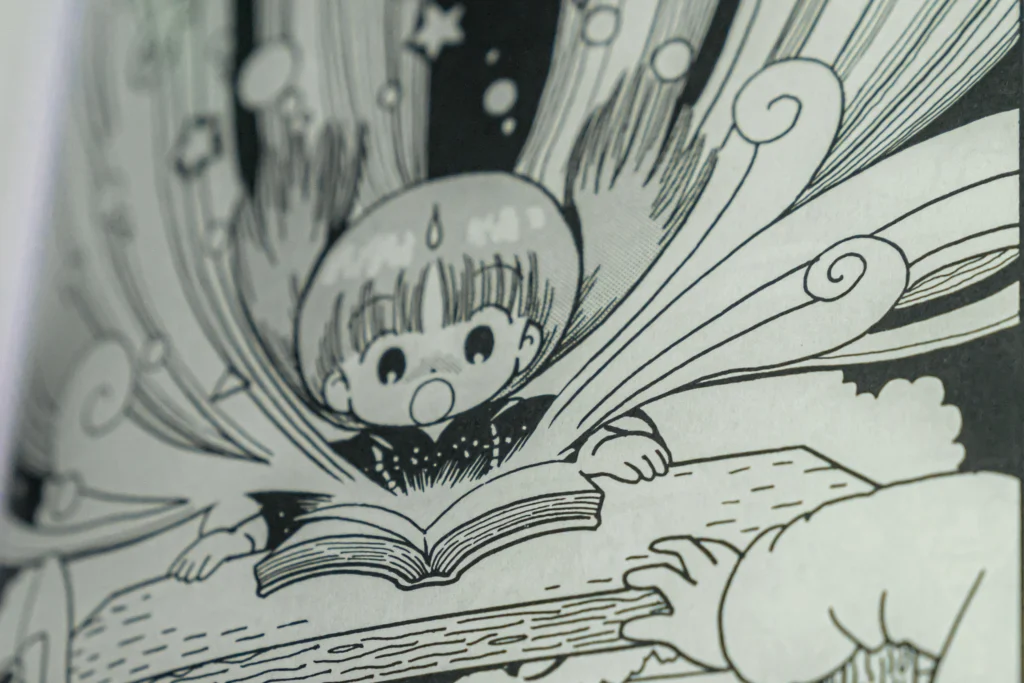
The graphic style also contributes to the atmosphere: the drawings are simple and cartoony, with exaggerated expressions and visual situations that amplify the comedy. It’s a style that prioritizes clarity and fun; it doesn’t aim for realism, but is nevertheless extremely expressive and recognizable.
Ultimately, Guru Guru is a manga that asks only one question: “Why should fantasy be taken so seriously?” The answer is obvious: it shouldn’t. It’s the ideal work for those who want to smile and demonstrates that fantasy can be told in a light and ironic way, without sacrificing the charm of adventure.