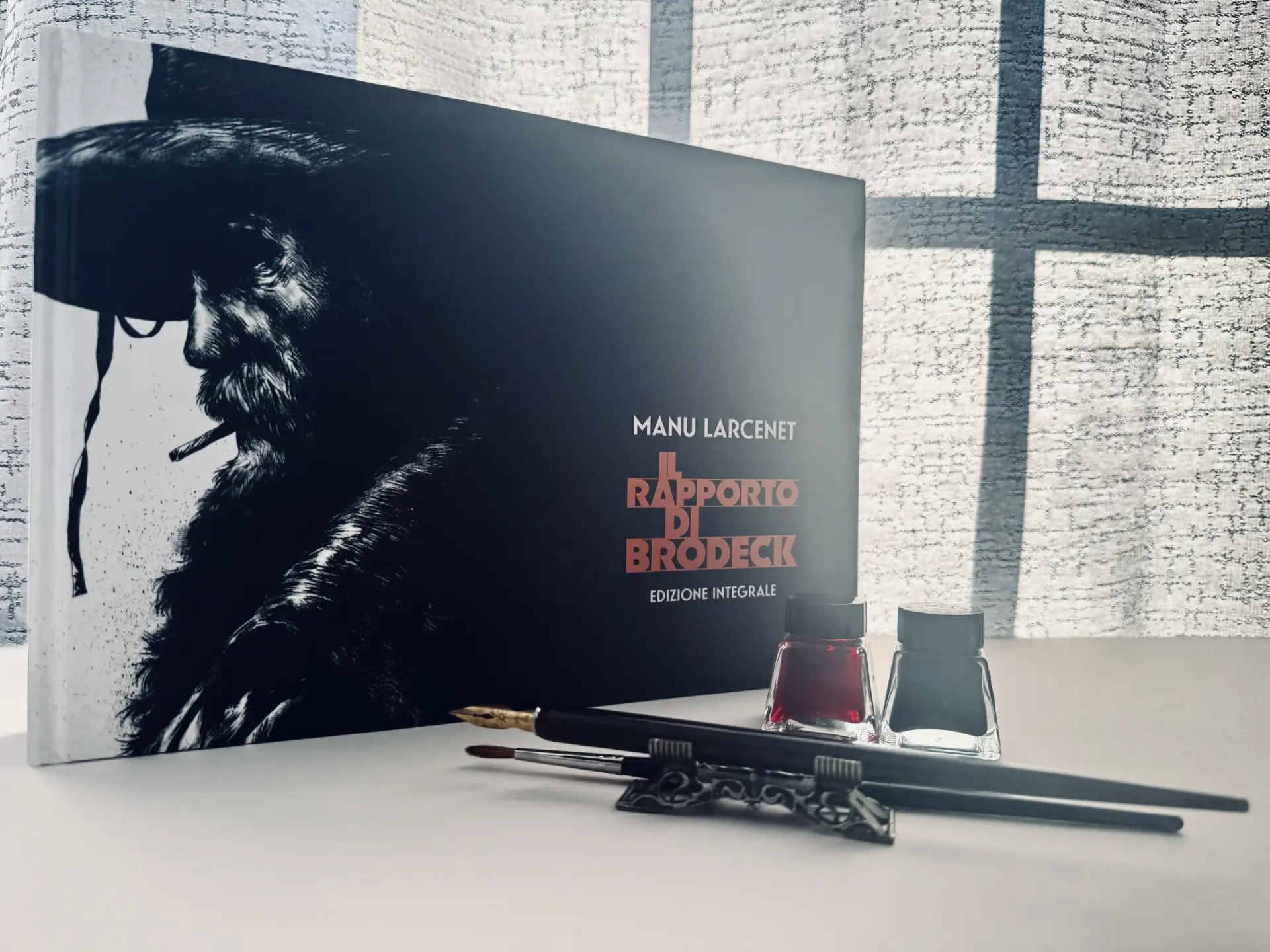
Brodeck’s Report is one of those works that boasts a masterful adaptation. Flipping through the pages of the graphic novel, it’s easy to experience the same feeling as when reading the novel, and vice versa. The images that take shape in the mind while reading Philippe Claudel’s book have been impressively rendered by Manu Larcenet’s pen.
The story is not lighthearted, yet it speaks directly to the heart. Only those who have known the weight of silence and the need to vent on paper, or by shouting at themselves, can fully understand the profound meaning of this work.
Brodeck finds himself chained, then freed, only to find himself bound by new chains: no longer physical, but mental. He is a prisoner of a village he once called “home”, and which now sees him as a stranger. He is a stranger just like the other protagonist, a mysterious and different figure, and therefore rejected by the community.
Tasked with writing a report that absolves the community of the horror committed, Brodeck becomes the sole guardian of a truth that no one wants to hear. Brodeck thus finds himself caught between a rock and a hard place. In this interplay between literature and graphic novel, Brodeck’s Report teaches us that memory is a burden that not everyone is willing to carry. But it is precisely in that burden, in the courage to remember even when everything pushes towards oblivion, that the only remaining form of human dignity resides.
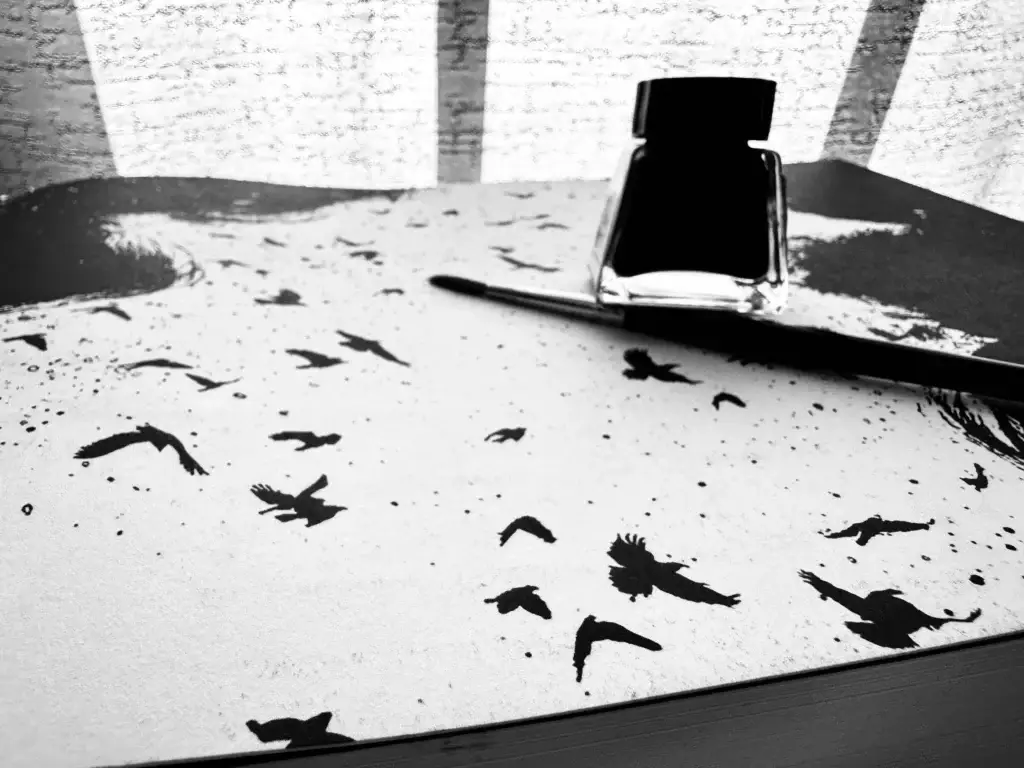
Larcenet’s graphic work is, without exaggeration, monumental. The lines are scratched, nervous, almost etched in stone. The visual narrative proceeds through emotional bursts. The author abandons any concession to color, taking refuge in an ancestral black and white, where white is not light, but blinding and icy snow, and black is not shadow, but a dense mud that seems to swallow the characters. Larcenet performs a sublime job in managing silence: entire sequences of panels without text allow only the eye to speak, forcing the reader to confront the immensity of nature and the horror of the unspoken. It is in this visual imbalance that the true tragedy of Brodeck lies: the awareness that, in such a beautiful world, the human being is the only stain capable of sullying the purity of the snow.
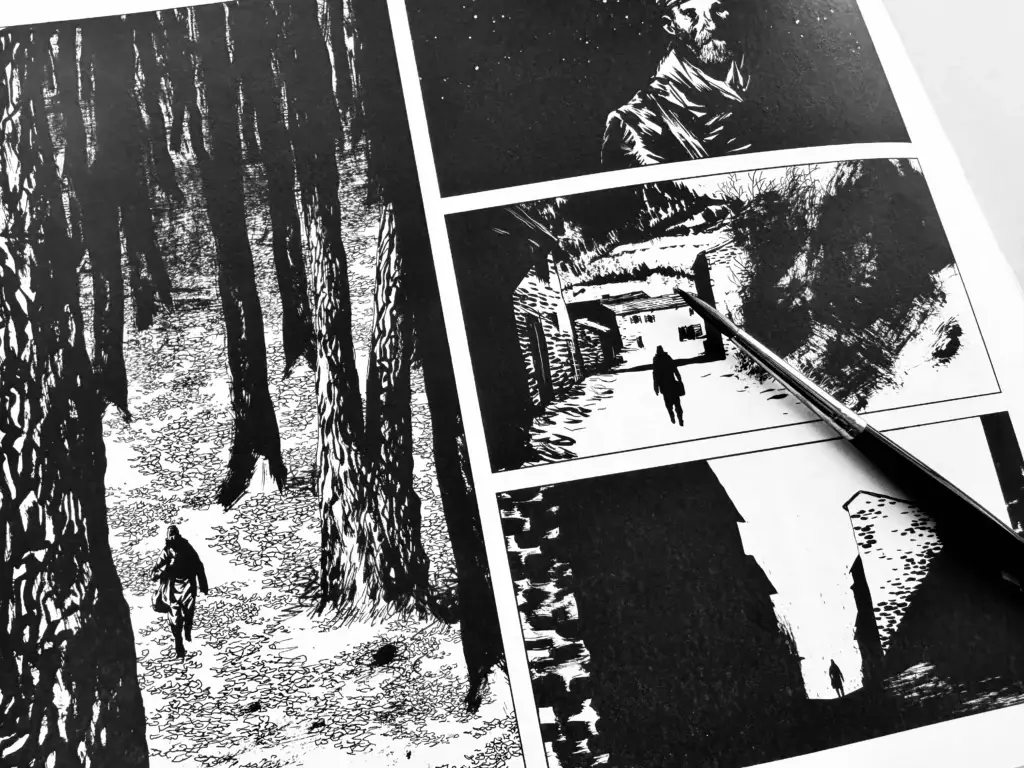
It’s a style that doesn’t allow the reader to breathe, visually conveying that sense of claustrophobia in the open air that characterizes the entire work. Each panel is a picture of suffering that manages to give form to the unspeakable.
It is an essential work that reminds us that the only true prison is the one built by the indifference of our fellow human beings.
Ultimately, Larcenet’s work is not just an adaptation, but a sensory experience that forces us to look into the abyss, reminding us that often the most terrible monster is not the one that comes from outside, but the one we carry within ourselves.