A good three years have passed since This World Can’t Tear Me Down, and so much can change in such a span of time. Lives continue, perspectives are upended, but what radically changes is the approach to life itself. With My Two Cents, Zerocalcare, (pseudonym of Michele Rech) takes us back into his life and that of his friends, showing us how these lives have changed in recent years.
Sarah, Secco, Wild Boar, and Zero himself face these three years of change with a profoundly human reality and fragility. Some find themselves with a child to care for, some must face the “monsters” of the past, and some find new ones at their door. Then there are those who choose to remain trapped in those internal “thorn bushes”—jealously guarded to keep any emotion from showing. Getting trapped in those “brambles” is done to protect those you love, but above all out of fear of not knowing how to protect yourself and ending up suffering again.
As is typical for Zerocalcare, the narrative follows the “autofiction” thread: a partially autobiographical story, enriched with fictional elements. In this new series, the two levels blend more than ever. The reason is simple: although not experienced firsthand by the author, these are true events, the kind we read about constantly in the crime sections of newspapers.
This third animated story is set in a Rome that is increasingly urban, harsh, and populated by anthropomorphic figures. Zerocalcare tackles a topic that is unfortunately familiar to many: toxicity in relationships. He does so with such an intimate and personal touch that it might seem alien to some viewers. Zerocalcare exposes that fear of the soul that often pushes us to deny reality and makes us hide behind those classic phrases we’ve all heard or uttered at some point:
“But he/she is changing…”
“Come on, he/she doesn’t always do this…”
“Deep down, he/she is a good person…”
“Only I can truly understand him/her.”
Zero doesn’t sugarcoat the pill; he is a protagonist who makes mistakes, procrastinates, and is terrified of life just like us. By normalizing failures, existential crises, and fragility, the series gives the viewer an incredibly liberating feeling.
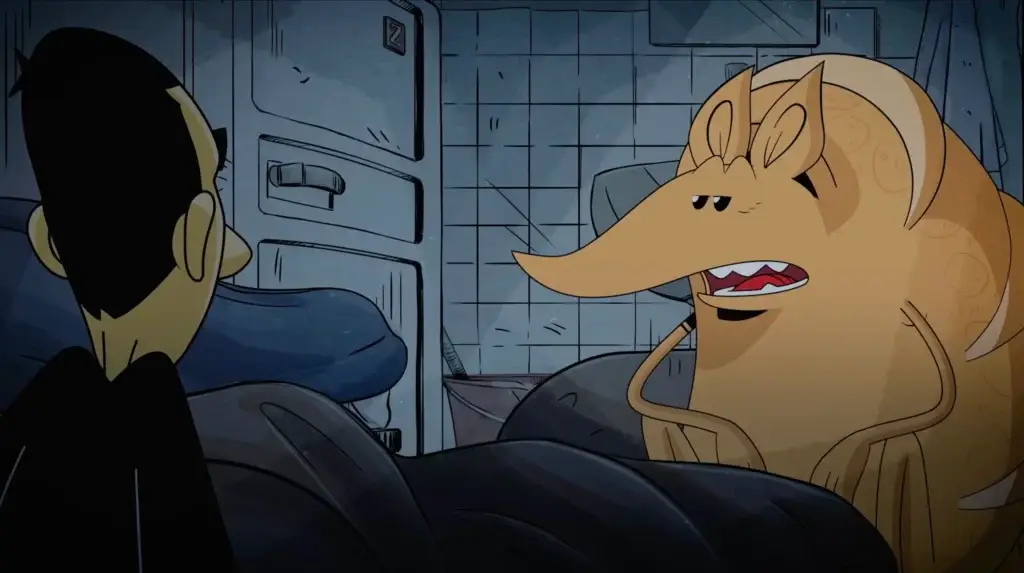
Much of this magic is contained in the Armadillo: the iconic personification of our worst defensive instincts, our feelings of guilt, and our darkest thoughts. Giving him a form allows us to ironize those consuming voices and confront them as we would a friend.
Without filters or shame, Zerocalcare paints a portrait of an entire generation crushed between insecurity, anxiety about the future, and the frustration of not meeting their parents’ expectations of success. Yet, he manages to make us feel at home thanks to a strong nostalgic element filled with pop culture references (from Sailor Moon to Pokémon) that transform the story into a chat between old friends.
Zerocalcare isn’t afraid to get his hands dirty with serious issues—like depression, suicide, and both emotional and physical abuse—but he refuses to craft the classic American happy ending. He doesn’t reassure you by telling you that “everything will be okay”, but instead shoves the truth in your face: you can live with unresolved issues. Zerocalcare doesn’t teach you how to live in the world, but he does something far more valuable: he makes you feel a little less alone.