
For those who grew up in the 1990s and 2000s, lunchtime wasn’t just about pasta with sauce, but also the chaos of a dysfunctional American family.
On April 10, 2026, the four-episode miniseries Malcolm in the Middle: Life’s Still Unfair! will arrive on Disney+. We’ll see a now-grown Malcolm, struggling with his daughter (I feel old just writing that, do you?) returning home for Hal and Lois’s 40th wedding anniversary. The original cast is almost complete: Bryan Cranston, Jane Kaczmarek, Frankie Muniz, Justin Berfield, and Christopher Masterson are all in the mix. The only painful absence is that of our beloved Dewey, as actor Erik Per Sullivan has decided not to return.
While we wait to turn on the screens again, let’s take a trip down memory lane to understand why Malcolm in the Middle wasn’t just a sitcom, but a true pillar of pop culture.
Before Malcolm in the Middle, family sitcoms featured tidy living rooms, moral lessons in the final three minutes of the episode, and irritating recorded laughter. Malcolm in the Middle took this format, stuffed it into a shopping cart, and hurtled it down a hill.
No fake laughter. The series was single-camera only, and with one protagonist who constantly broke the fourth wall to complain directly to us. It was a chaotic and dirty world, perpetually on the brink of economic collapse; it was real life (seasoned with a dose of homemade explosives in the backyard) filtered through brilliant comedy.
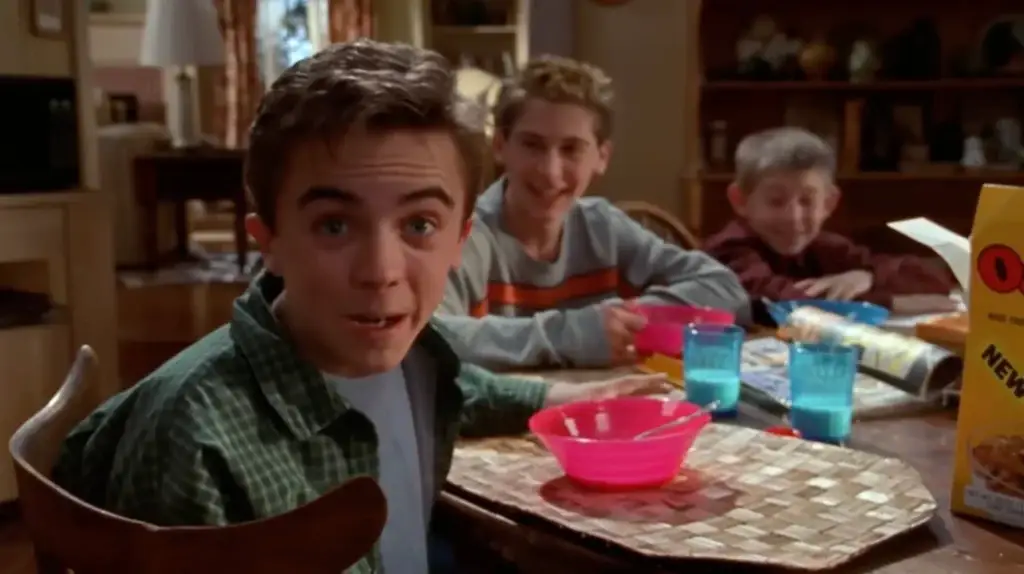
Eight years before he started cooking on Breaking Bad, Bryan Cranston gave us one of the most hilarious slapstick performances on TV as Hal: a father terrified of life, with a thousand obsessive hobbies and a visceral love for his wife. At his side, a masterful Jane Kaczmarek ruled the world as Lois. She was the tyrannical mother no one wanted, but we later learned she was the only line of defense between the home and the nuclear apocalypse her children created.
And speaking of children, the team wouldn’t be complete without them. Each of them represented a different aspect of adolescence. Francis was the mythological hero, the one exiled between military academies and Alaska, and was the embodiment of pure rebellion. Reese was the evil genius with the IQ of a nightstand; his dedication to bullying was an art, but he was compensated by an innate talent for haute cuisine. He embodied the aspect of unappreciated and therefore wasted potential. Malcolm was the ego. He was the one who believed his IQ made him superior, but always ended up getting into disastrous trouble. He was the perfect reflection of adolescent frustration. On the other hand, Dewey was the quintessential misunderstanding: from the brothers’ punching bag to Machiavellian manipulator and musical prodigy. Without a doubt, he was the character with the most profound evolution in the series and the one who, ultimately, represented the growth of an average teenager.

Malcolm anticipated the future, gifting us with quotes that have become immortal memes. Here are some pearls of wisdom straight from the Wilkerson household:
“The future is now, old man.” — Dewey. The definitive quote for any generational clash.
“I expect nothing and I’m still disappointed.” — Dewey again. The motto of an entire generation and the official state of mind for every Monday morning.
“My mother screamed at me before I was even born!” — Malcolm, who sums up in one line the trauma of living with Lois.
“Yes, no, maybe… I don’t know. Can you repeat the question?” — It’s impossible to read this without singing the They Might Be Giants theme song.
In an era dominated by reboots that often make us long for the original, the world of Malcolm in the Middle has something extra: its brutal irony and cynical look at life’s injustice haven’t aged a day. In fact, now that many of those kids have become adults with bills to pay, Lois’ hysterical cries are starting to make dramatic sense.
Remember the Wilkersons’ most important lesson: life is unfair… but, at least starting this year, we can laugh about it again!