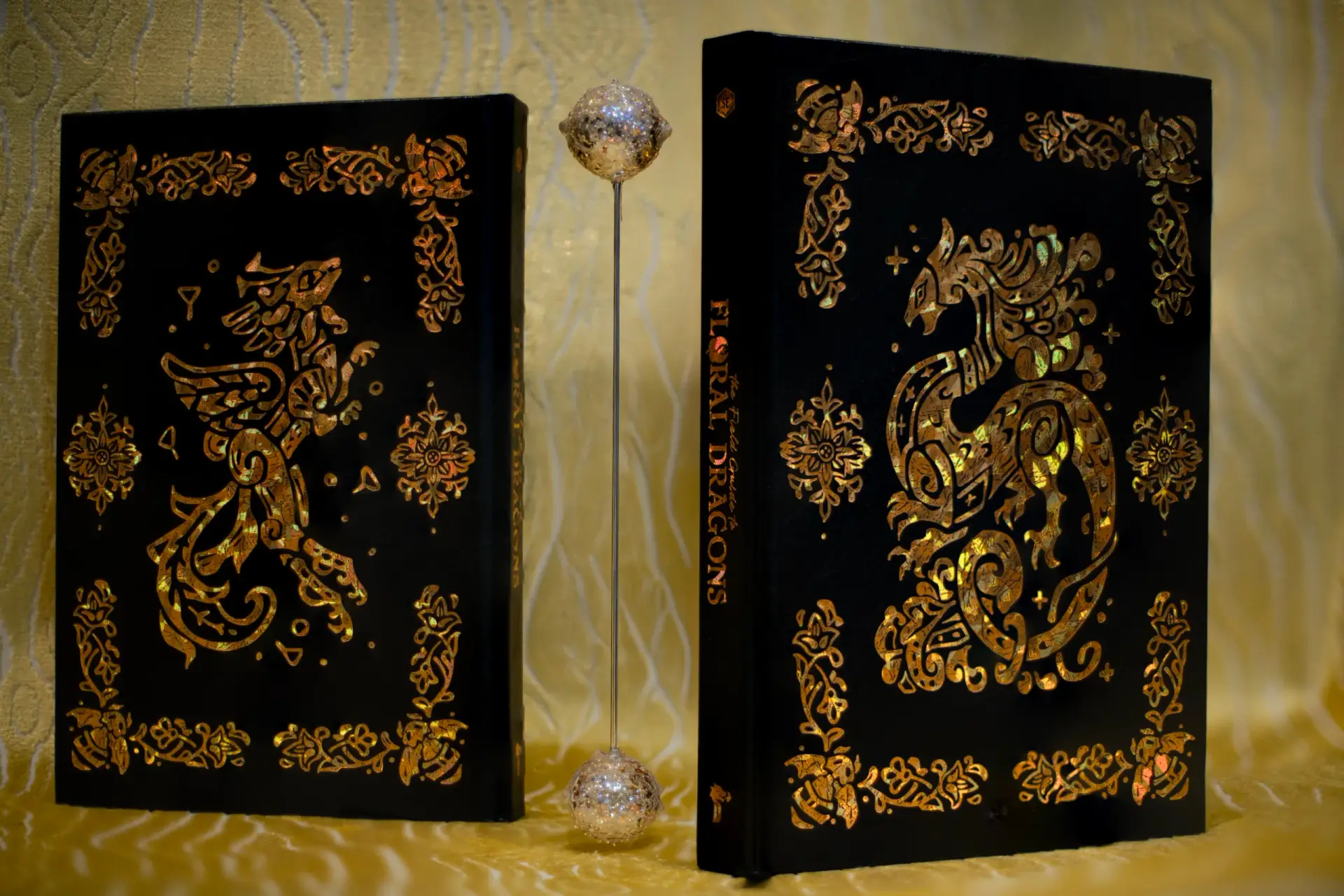
Enough with the usual majestic, scale-covered dragons ready to breathe fire. We present The Field Guide to Floral Dragons, a complete expansion manual for 5E.
Have you always dreamed of a druidic-themed adventure or do you simply want to free your table from the usual clichés? The answer is Floral Dragons.
Forget the binary distinction between chromatic and metallic dragons; here, the creature’s biology determines its temperament and combat style. Imagine having to fear not just a fiery breath, but a cloud of hallucinogenic pollen suddenly blooming from the wings of a Clematis Dragon. Imagine having to penetrate the defense of a predator whose hide is not made of bone armor, but a woody mesh of poisonous roots and thorns. Each creature is a living ecosystem that reacts to its environment: a Manchineel-inspired dragon won’t just bite, but it will exude a caustic sap capable of corroding the armor of even the most unwary paladins.
The immersion doesn’t stop with the narrative, but extends to the dungeon master’s sheet. The proposed variants transform the encounter with the dragon into a tactical challenge tied to botany. There are creatures that draw strength from sunlight, regenerating mortal wounds in a few seconds and others that possess abilities tied to transience and time, offering a gameplay experience that’s both poetic and deadly. They’re not just “monsters with wings”, but guardians of specific biomes that force players to completely rethink their approach to combat and exploration.
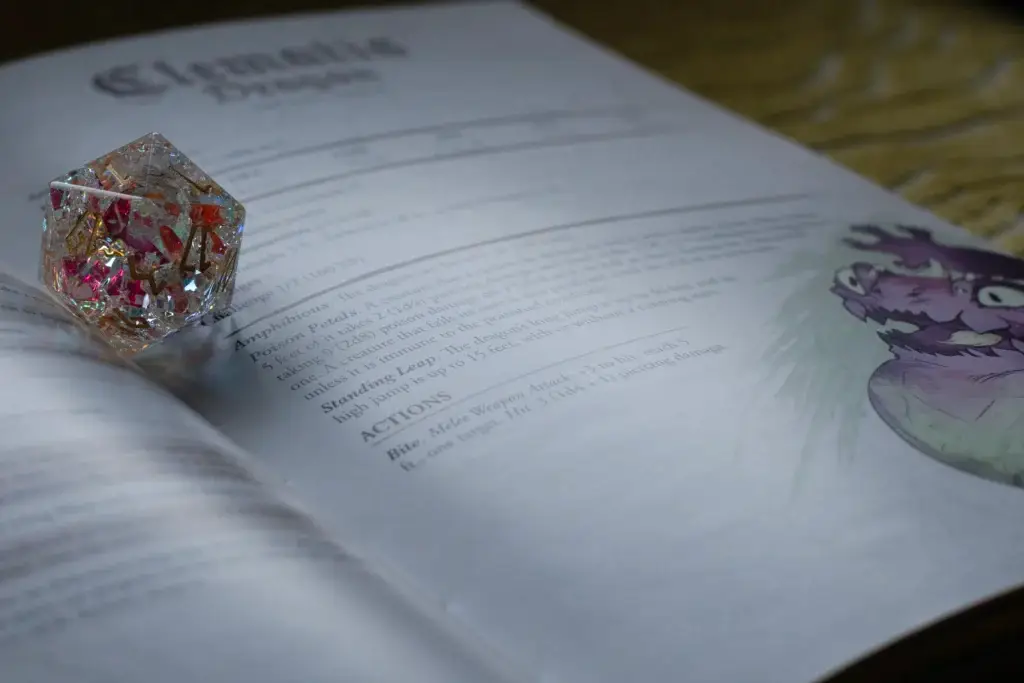
An idea for your next session: a necromancer druid wants to restore nature to its ancient splendor, but to do so, he is corrupting it by reanimating dead plants and infusing them with the power of ancient and legendary beasts. This one’s on us!
It is not your usual “brick”. Unlike classic heavy and academic manuals, this volume presents itself as a collection of notes written by four different explorers. Between the pages, you will find meticulous details on each creature—from physiology to habitats—without forgetting the typical behaviors of each species. In effect, it is a narrative and immersive bestiary.
It’s more than just a list of monsters. Is it just a list of dragons to defeat? Absolutely not. Although it doesn’t contain a linear adventure, the narrative ideas and plotlines that these manual offers are numerous. The inspirations for these creatures draw heavily from the flora of our world: from the deadly Manchineel to the delicate Clematis, passing through the more famous Cherry and Apple trees.
The beasts are numerous, and the challenges that await you are even more so.